


Home generator installation in Lakefield Ontario is a decision most homeowners start seriously considering after the first outage that lasted long enough to cause real consequences. In a rural community like Lakefield, a power outage does not just turn the lights off.
It shuts down the well pump, the sump pump, and the furnace. The house loses water, loses flood protection, and loses heat in a single event, and the duration of that event is entirely outside the homeowner’s control.
In this article, you will learn exactly what a power outage takes from a Lakefield home beyond the lights, how standby and portable generators differ in what they protect and how they operate, why sizing the generator correctly matters more than most homeowners expect, what permits, inspections, and trades are required before the unit can run, and what maintenance keeps the generator ready for the storm that has not arrived yet.
Here’s what you’ll find below.
- A power outage in Lakefield takes more from the house than the lights
- A standby generator and a portable generator protect the house in very different ways
- Sizing the generator wrong means it either cannot keep up or runs at a fraction of its capacity
- The installation involves three permits and two trades before the unit ever runs
- Storm backup power only works if the generator is maintained before the storm arrives
Keep reading to understand what a standby generator installation involves and what to plan before the next outage tests the house again.
A power outage in Lakefield takes more from the house than the lights
Lakefield sits in a rural area served by overhead power lines that run through wooded corridors and open agricultural land. Ice storms, windstorms, and heavy snow events take down lines and branches with a regularity that makes extended outages a recurring fact of life rather than an unusual event. When the power goes out, the impact on a Lakefield home is immediate and cascading.
The well pump stops and the house loses all running water within minutes
Most Lakefield homes are on private wells. The submersible pump that draws water from the well and delivers it to the pressure tank requires electricity to operate. When the power fails, the pump stops. The pressure tank holds a limited reserve of pressurized water, typically enough for a few minutes of use, and once that reserve is depleted, no water flows from any faucet in the house.
No water means no drinking water, no flushing, no handwashing, no cooking with running water, and no fire suppression capability from garden hoses or interior fixtures. For a household with young children, elderly members, or anyone requiring access to running water for medical reasons, the loss of the well pump during a winter storm creates an immediate hardship.
A standby generator that powers the well pump circuit restores running water within seconds of the power failure, and the household operates normally for the duration of the outage.
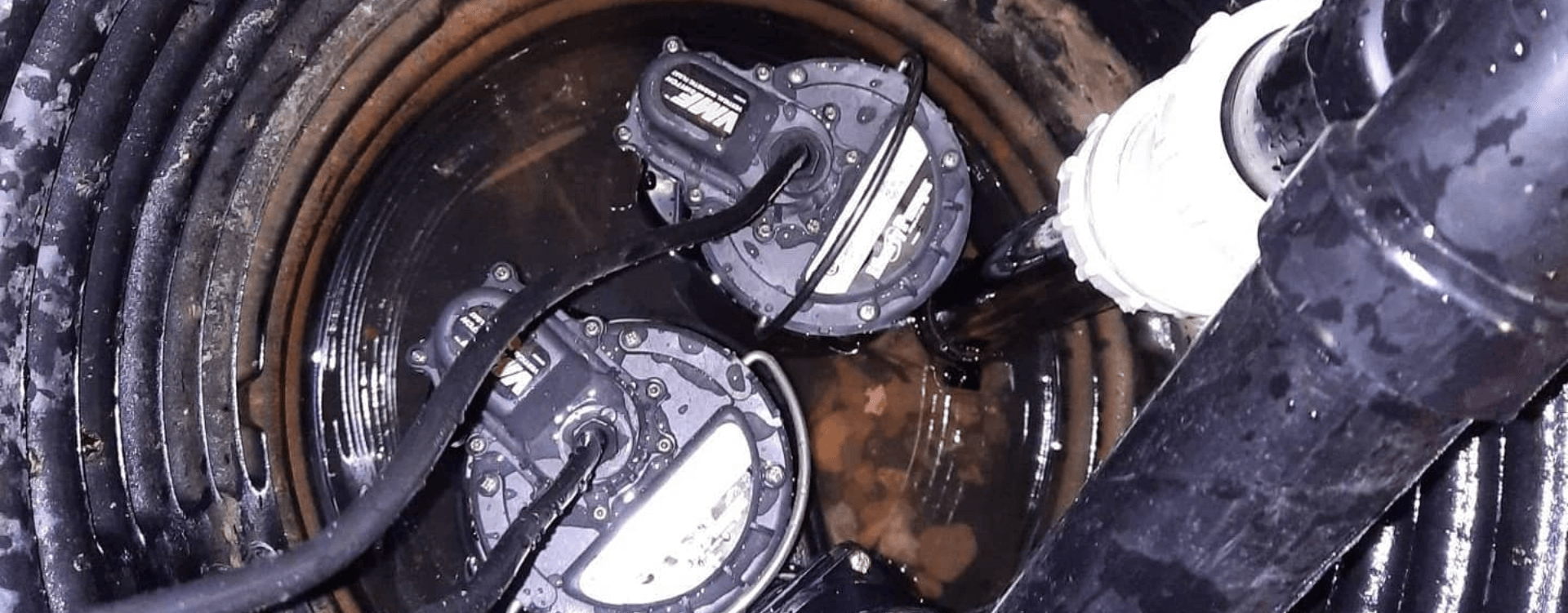
The sump pump goes down during the same storm that is pushing water toward the foundation
The events that cause extended power outages in Lakefield, particularly ice storms and spring storms with heavy rain, are the same events that produce the high water conditions that the sump pump is designed to handle. A storm that dumps heavy rain while simultaneously knocking out the power leaves the sump pump inoperable at the exact moment the basement needs it most.
A sump pit that fills during a multi-hour outage can overflow into the basement, damaging flooring, drywall, stored belongings, and any mechanical equipment at floor level. The damage from a single flood event can exceed the cost of a generator installation.
A standby generator that includes the sump pump circuit in its load keeps the pump running throughout the storm, which is the only scenario where the pump can do the job it was installed to do during the conditions that matter most.
A furnace with electronic ignition will not fire without electricity even if the fuel is flowing
A common misconception is that a gas or propane furnace will continue to heat the house during a power outage because the fuel supply is independent of the electrical grid. In reality, virtually all modern furnaces require electricity to operate the control board, the ignition system, the inducer motor, and the blower fan.
A furnace with electronic ignition, which includes every furnace manufactured in the last 25 years, will not fire without electrical power. The thermostat has no power, the control board has no power, the ignition sequence cannot initiate, and the blower cannot circulate air. The fuel may be available, but the furnace cannot use it.
During a winter outage in Lakefield, where overnight temperatures can drop well below minus 15 degrees Celsius, a house without heat begins losing interior temperature within hours. Pipes in exterior walls and crawl spaces are at risk of freezing within a day if the outage extends. A generator that powers the furnace circuit keeps the heating system operational and protects the house from freeze damage.
- The well pump, the sump pump, and the furnace all require electricity regardless of their fuel source
- A power outage during a storm creates simultaneous loss of water, flood protection, and heat
- The pressure tank provides only a few minutes of water reserve before the taps run dry
- Interior temperatures in a Lakefield home can drop below freezing within 12 to 24 hours during a winter outage without supplemental heat
A standby generator and a portable generator protect the house in very different ways
The two categories of residential generator serve fundamentally different purposes. A standby generator is a permanently installed, automatic system that provides whole-house or near-whole-house power. A portable generator is a manually operated unit that powers a limited number of circuits or appliances. Understanding the difference determines which one matches the homeowner’s needs.
A whole home generator starts within seconds and runs on propane or natural gas until power returns
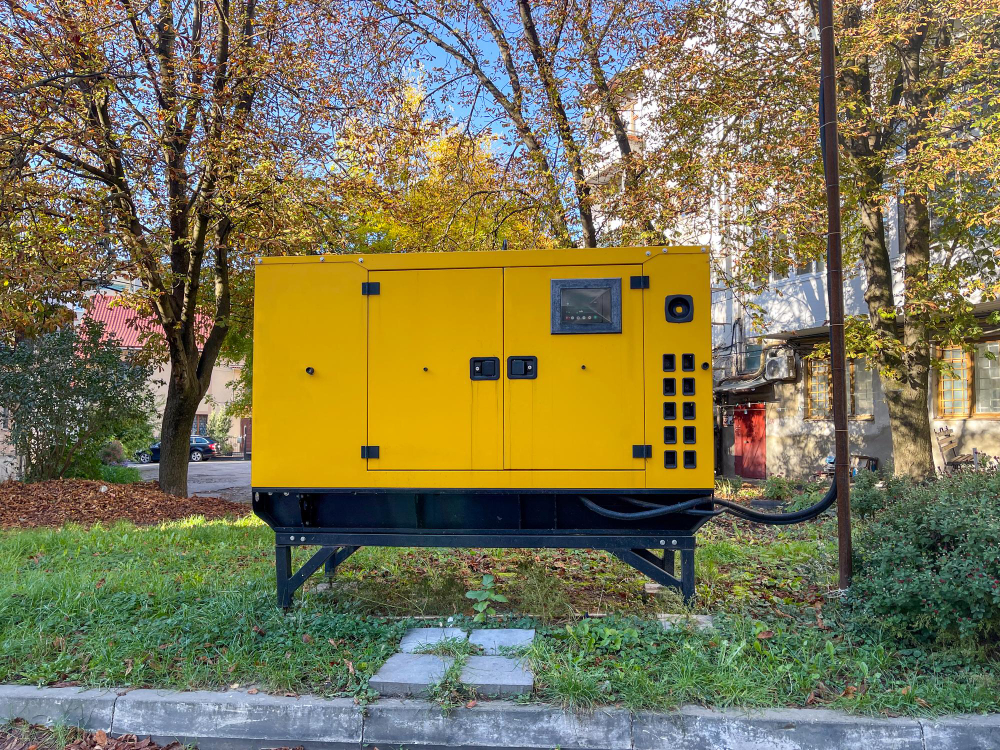
A standby generator is a permanently mounted unit that sits on a concrete pad beside the house, connects to the electrical panel through an automatic transfer switch, and runs on propane or natural gas from a dedicated fuel supply. When the utility power fails, the transfer switch detects the loss, signals the generator to start, and transfers the house’s electrical load from the grid to the generator within 10 to 30 seconds.
The homeowner does not need to be present. The system operates automatically, whether the outage occurs at 3 a.m. during a blizzard, while the household is at work, or during a vacation. The generator runs continuously on its fuel supply until utility power is restored, at which point the transfer switch returns the load to the grid and the generator shuts down.
For a Lakefield home on well water with a sump pump and a forced-air furnace, a whole home generator provides automatic, uninterrupted protection for every critical system in the house.
A portable unit needs someone home to start it, fuel it, and connect it through a proper transfer mechanism
A portable generator requires manual setup every time the power goes out. The homeowner must wheel the unit to a location outside the house, start it, connect it to the house through an approved transfer switch or through individual extension cords, and refuel it periodically throughout the outage.
Portable generators run on gasoline, which requires the homeowner to store fuel safely and to have enough on hand for an extended outage. A portable generator that runs eight hours on a full tank needs refuelling three times during a 24-hour outage. During a winter storm, this means going outside in the weather every eight hours to add gasoline to a running engine.
How standby and portable generators compare for Lakefield conditions:
- A standby generator starts automatically in seconds. A portable generator requires the homeowner to be present, go outside, and start the engine manually
- A standby generator runs on propane or natural gas from a dedicated tank with hundreds of hours of fuel capacity. A portable generator runs on gasoline with a tank that lasts 6 to 12 hours
- A standby generator powers the house through a permanent transfer switch that manages the entire load. A portable generator typically powers individual circuits or appliances through extension cords or a manual transfer panel
- A standby generator operates in any weather without the homeowner going outside. A portable generator must be positioned outdoors and protected from rain, snow, and wind during operation
Backfeeding a portable generator into the panel without a transfer switch is illegal and can kill a utility worker
Connecting a portable generator directly to the electrical panel by plugging a cord into an outlet or wiring the generator directly into the panel without a transfer switch is called backfeeding. This practice is a violation of the Ontario Electrical Safety Code, and it creates a lethal hazard.
When a generator backfeeds into the panel without a transfer switch to isolate the house from the grid, the generator’s output travels backward through the service entrance cable and onto the utility lines. Utility workers who are repairing the downed lines assume those lines are de-energized. A backfed line delivers lethal voltage to workers who are handling what they believe is a dead wire.
A transfer switch, whether automatic for a standby generator or manual for a portable unit, physically disconnects the house from the grid before the generator power is connected to the panel. This isolation protects the utility workers, protects the generator from damage when grid power returns, and is a legal requirement for any generator connected to a residential electrical system. The Electrical Safety Authority enforces this requirement through the ESA permit and inspection process.
Sizing the generator wrong means it either cannot keep up or runs at a fraction of its capacity
A generator that is too small for the household’s critical loads will overload and shut down during peak demand. A generator that is significantly oversized runs at low load percentages, which wastes fuel and can cause wet stacking in diesel units or carbon buildup in gas engines. Correct sizing matches the generator’s rated output to the household’s actual demand.
A 14 to 18 kW unit covers the well pump, sump pump, fridge, furnace, and basic circuits in most homes
For a typical Lakefield home with a submersible well pump (1 to 1.5 HP), a sump pump (0.5 HP), a forced-air furnace blower, a refrigerator, basic lighting circuits, and a few convenience outlets, the total critical load falls in the 14 to 18 kW range.
This sizing provides enough capacity to run all critical systems simultaneously, including the starting surge of the well pump and the air conditioner if one is present. It also provides a margin for intermittent loads like a microwave, a toaster, or a washing machine that may cycle on during the outage.
A generator installation services provider performs a load calculation that identifies every circuit the homeowner wants to include in the generator’s coverage and totals the running and starting wattage of each load. This calculation, not a guess based on house size, determines the correct generator rating.
Electric heat, a hot tub, or a workshop changes the calculation and may push the unit to 20 kW or higher
Homes with electric baseboard heating, an electric forced-air furnace, a hot tub, or a home workshop with high-draw equipment require significantly more generator capacity than a home with gas heat and standard household loads.
Electric heat is one of the largest residential electrical loads. A home with 15 kW of electric baseboard heat would need a generator rated at 20 kW or higher just to serve the heating load, before adding the well pump, the sump pump, and the household circuits. In most cases, the generator is sized to serve the critical heating zones rather than the entire baseboard system, which requires load management planning during the sizing process.
A hot tub at 30 to 50 amps and a workshop with a welder or compressor at 30 to 60 amps each represent loads that can push the generator requirement to 22 kW or beyond. These loads may be managed by excluding them from the generator coverage or by installing a load-shedding controller that prevents them from running simultaneously with other high-draw circuits.
An older 100 amp panel may need an upgrade before the backup generator installation can proceed
A standby generator connects to the house through a transfer switch that is installed adjacent to or integrated with the main electrical panel. The transfer switch must be compatible with the panel’s bus design, and the panel must have adequate space and capacity to accommodate the transfer switch connection.
An older 100 amp panel that is already full may not have the physical space for a transfer switch, and the 100 amp service may not have enough capacity to support the generator’s output alongside the normal utility feed when power is restored and the system transitions back.
In many cases, a panel upgrade to 200 amps is recommended or required before the generator installation can proceed. Combining the panel upgrade and the generator installation into a single project reduces the total cost compared to doing them separately and ensures that the electrical infrastructure supports the generator fully.
Q: Can the generator be installed on a 100 amp panel without upgrading?
It depends on the panel’s available space and the generator’s size. A smaller generator with a load-management transfer switch can work with some 100 amp panels. A whole-home generator typically requires a 200 amp service.
Q: Does the panel upgrade and the generator installation happen at the same time?
They can be coordinated as a single project, which is the most cost-effective approach. The electrician upgrades the panel, installs the transfer switch, and runs the generator feeder in one scope of work.
Q: What if I only want the generator to power a few circuits, not the whole house?
A load-management transfer switch can be configured to power only selected essential circuits, which allows a smaller generator to serve the critical loads without requiring a full panel upgrade. This is a common approach for homeowners who want to manage cost while still protecting the well pump, sump pump, furnace, and refrigerator.
Q: How does the electrician determine whether the panel needs upgrading?
The electrician evaluates the panel’s rated capacity, available breaker spaces, bus condition, and compatibility with the transfer switch hardware. If the panel cannot accommodate the transfer switch or lacks the capacity for the generator’s output, an upgrade is recommended.
The installation involves three permits and two trades before the unit ever runs
A standby generator installation in Ontario is a regulated process that involves electrical work, fuel system work, and compliance with municipal bylaws. The permits and inspections exist to protect the homeowner, the utility workers, and the neighbours.
The ESA permit covers the transfer switch, the wiring, and the connection to the panel
The electrical portion of the generator installation, including the transfer switch, the feeder cable from the generator to the transfer switch, the connection to the panel, and any new circuits added as part of the project, requires a permit from the Electrical Safety Authority.
The ESA permit is obtained by the licensed electrician before the work begins. After the electrical installation is complete, an ESA inspector examines the transfer switch, the wiring, the connections, and the grounding to confirm that everything meets the Ontario Electrical Safety Code. The installation cannot be energized until it passes inspection.
The TSSA inspection covers the propane or natural gas fuel line from the tank to the generator
The fuel line that connects the propane tank or the natural gas supply to the generator must be installed by a licensed gas technician (G2 or G3 licence under TSSA regulations) and inspected by the Technical Standards and Safety Authority. The TSSA inspection verifies that the fuel line is properly sized, that all connections are leak-free, that the regulator is set correctly, and that the installation meets the Ontario fuel safety code.
For a propane-fueled generator, the fuel system includes the propane tank, the regulator, the supply line from the tank to the generator, and the connection at the generator’s fuel inlet. For a natural gas installation, the fuel system ties into the home’s existing gas supply through a dedicated branch and regulator.
The gas technician and the electrician may be from the same company or from separate trades. In either case, both the ESA and the TSSA inspections must pass before the generator is commissioned and put into service.
Setback requirements, noise bylaws, and clearance from vents and windows determine where the unit sits
The generator’s physical location on the property is governed by the manufacturer’s installation requirements, the Ontario Building Code, and any applicable municipal bylaws in the Township of Selwyn, which includes Lakefield.
- The generator must maintain minimum clearances from the home’s exterior walls, windows, doors, and fresh air intakes as specified by the manufacturer, typically 1.5 metres from openings
- The unit must be positioned on a level, stable surface such as a poured concrete pad or a manufactured composite pad rated for the generator’s weight
- Exhaust must be directed away from windows, doors, and outdoor living areas to prevent carbon monoxide from entering the house or affecting neighbours
- Noise levels must comply with any applicable municipal noise bylaws, and the generator should be positioned to minimize sound impact on adjacent properties
Storm backup power only works if the generator is maintained before the storm arrives
A standby generator that has not been serviced, tested, or fuelled will not perform when the outage hits. The value of the installation depends entirely on the readiness of the system at the moment it is needed.
A weekly self-test cycle keeps the engine and battery ready but it does not replace annual service
Most standby generators include a programmable self-test feature that starts the engine automatically once a week, runs it for 10 to 20 minutes, and shuts it down. This test keeps the engine lubricated, charges the starter battery, and verifies that the engine will start on command.
The self-test does not check the oil level, the air filter, the spark plugs, the coolant condition, or the fuel system components. It does not verify the transfer switch operation under load. It confirms that the engine starts and runs, which is necessary but not sufficient for full operational readiness.
Annual professional service includes an oil and filter change, spark plug inspection or replacement, air filter replacement, battery load test, coolant check on liquid-cooled units, transfer switch exercise under load, and a full functional test that simulates an outage and verifies the entire sequence from power loss through generator start to load transfer and back.
- The weekly self-test runs the engine but does not exercise the transfer switch under full household load
- Annual service includes oil change, filter replacement, spark plug inspection, and a full-load transfer test
- The starter battery should be load-tested annually and replaced every three to four years before it weakens enough to prevent a cold-weather start
- Coolant-cooled units require coolant level checks and periodic coolant replacement per the manufacturer’s maintenance schedule
A propane tank that runs low between deliveries leaves the generator without fuel when it matters most
A propane-fueled standby generator consumes fuel at a rate that depends on the generator’s output and the household load. A 16 kW generator running at 50 percent load may consume 7 to 10 litres of propane per hour. Over a 24-hour outage, that is 170 to 240 litres of propane.
If the propane tank also supplies the furnace, the water heater, the stove, and the dryer, the total household propane consumption during a winter outage is substantially higher than the generator alone. A tank that was half full at the start of the outage may not have enough fuel to run both the generator and the household appliances for the duration of a multi-day outage.
Homeowners with propane-fueled generators should maintain a minimum tank level that provides at least 72 hours of combined generator and household fuel consumption. Scheduling propane delivery before the winter storm season begins and monitoring the tank gauge monthly ensures the fuel is available when the generator needs it.
Generator installation services include the setup, but the homeowner owns the maintenance from that point forward
The generator installation provider delivers and positions the unit, installs the electrical connections and transfer switch, coordinates the fuel line installation, schedules the ESA and TSSA inspections, and commissions the system. Once the generator is operational and the inspections pass, the ongoing maintenance responsibility belongs to the homeowner.
Some manufacturers require annual service by an authorized dealer to maintain the warranty. Others specify minimum maintenance intervals that the homeowner can perform or hire a technician to complete. In either case, the maintenance schedule is documented in the owner’s manual and should be followed from the first year of operation.
A generator that runs for five minutes a week during its self-test cycle and is never serviced will not be reliable when it needs to run continuously for 24, 48, or 72 hours during a winter storm. The engine oil degrades, the battery weakens, and the fuel system components deteriorate exactly as they would in any small engine that receives intermittent use without regular maintenance.
- Follow the manufacturer’s maintenance schedule from the first year of operation, including oil changes, filter replacements, and spark plug service
- Maintain propane tank levels above 30 percent year-round and schedule a fill before the winter storm season
- Test the transfer switch under load at least once per year by simulating an outage with the main breaker
- Keep the area around the generator clear of snow, debris, and vegetation to ensure adequate airflow and exhaust clearance
Conclusion
A home generator installation in Lakefield Ontario protects the household from the cascading consequences of an extended power outage: no water from the well, no flood protection from the sump pump, and no heat from the furnace. In a rural community where outages are measured in hours or days rather than minutes, a standby generator is not a luxury. It is the system that keeps the house functional and safe when the grid cannot.
The installation involves sizing the generator to the household’s actual load, coordinating the electrical and fuel system work with licensed trades, passing ESA and TSSA inspections, and positioning the unit in compliance with code and bylaw requirements. The process is more involved than plugging in a portable unit, and the result is a system that operates automatically, runs on a stable fuel supply, and requires no intervention from the homeowner at the moment of the outage.
If your Lakefield home has a well, a sump pump, and a furnace that all stop working the moment the power goes out, contact Cardinal Home Services to schedule a generator evaluation and find out what it takes to keep the house running through the next storm.