


Plumbing maintenance in Oshawa is the kind of service most homeowners think about only after something goes wrong. A pipe starts leaking behind the bathroom wall, the sump pump fails during the first heavy rain of the season, or the water heater gives out on the coldest night of the year. Each of these situations is preventable, and each one starts with a condition that was developing quietly for months or years before it produced a visible symptom.
In this article, you will learn why the plumbing in an older Oshawa home ages on its own timeline and what that means for supply lines, drain stacks, and sewer connections, how small leaks cause damage long before they become obvious, what seasonal maintenance protects against in a Durham Region climate, why drain maintenance prevents the slow buildup that leads to a full backup, and what a professional maintenance visit actually inspects behind the scenes.
Here’s what you need to know.
- The plumbing in an older Oshawa home is aging whether you can see it or not
- The small leak you have not found yet is already doing damage somewhere
- Seasonal plumbing maintenance in Oshawa follows what the weather does to the system
- Drain maintenance prevents the slow buildup that turns into a full backup
- What a plumbing maintenance visit actually checks and why each item matters
Keep reading to understand the maintenance that keeps your plumbing system reliable and prevents the kind of emergency call that always arrives at the worst possible time.
The plumbing in an older Oshawa home is aging whether you can see it or not
Oshawa’s housing stock includes a significant number of homes built between the 1940s and the 1980s, and the plumbing systems in those homes are reaching or exceeding the service life of the original materials. What looks fine from the finished side of the wall may be corroding, narrowing, or weakening behind it.
Cast iron stacks and clay sewer lines from the 1950s corrode on a timeline, not a schedule
Homes built in Oshawa during the post-war decades typically used cast iron for drain stacks and clay tile for sewer lines running from the house to the municipal connection. Both materials have a finite lifespan that depends on soil conditions, usage patterns, and whether the home has experienced root intrusion or ground movement.
Cast iron drain stacks corrode over time, particularly at horizontal runs where standing water sits between uses. The interior surface of the pipe develops pitting and scale that eventually eats through the wall. A stack that has been in service for 60 or 70 years is operating past the typical service window for cast iron, and the risk of a joint failure or a full perforation increases with each passing year.
Clay sewer lines are vulnerable to root intrusion at every joint. The roots of mature trees along the line route grow toward the moisture escaping through the joints and enter the pipe through gaps that widen as the clay deteriorates. A camera inspection of the main drain line reveals the interior condition of these pipes before a failure occurs.
A pipe that looks fine from the outside can be narrowing from buildup on the inside
Galvanized steel supply lines corrode from the inside out. The zinc coating that originally protected the interior surface wears away over decades, and the exposed steel begins to rust. The rust builds inward, layer by layer, reducing the effective diameter of the pipe.
A homeowner cannot see this process from outside the pipe. The exterior may look clean and intact while the interior has narrowed to half its original opening. The result is a gradual decline in water pressure that many homeowners attribute to municipal supply changes rather than their own plumbing.
When pressure drops across multiple fixtures and the municipal supply is not the cause, internal pipe corrosion is one of the most likely explanations. A plumber evaluating the supply system can test pressure at the main shutoff and at individual fixtures to determine whether the restriction is in the distribution piping. In advanced cases, whole-home repiping is the solution that restores full flow and eliminates the corrosion that individual repairs cannot reverse.
Residential plumbing maintenance exists because most failures start where homeowners cannot look
The components of a plumbing system that fail most often are the ones that are least visible. Supply line connections behind walls, drain fittings inside floor assemblies, wax ring seals beneath toilets, and shutoff valves that have not been turned in years all deteriorate out of sight.
Residential plumbing maintenance is designed to evaluate these concealed components before they produce an emergency. The plumber checks accessible pipe runs, tests valves, inspects the water heater, evaluates the sump pump, and looks for early indicators of conditions that will become problems if left unaddressed.
- Supply valve corrosion develops slowly inside the valve body and may not be visible until the valve fails to close during an emergency
- Wax ring seals beneath toilets compress over time and can allow sewer gas or moisture to reach the subfloor without producing any visible leak on the bathroom floor
- Water heater anode rods are consumed gradually and, once depleted, allow the tank interior to corrode at an accelerated rate
- Drain trap seals in floor drains can evaporate during dry seasons, allowing sewer gas into the basement without any plumbing malfunction
The small leak you have not found yet is already doing damage somewhere
A plumbing leak does not need to be dramatic to cause serious damage. The slow, invisible drip behind a wall or under a vanity causes the same structural and mold problems that a visible leak produces. The only difference is the timeline.
A drip behind a wall or under a cabinet can run for months before the stain appears
A supply line fitting that seeps at a rate of one drop every few seconds produces enough moisture over the course of weeks to saturate the surrounding drywall, framing, or cabinet base. The damage accumulates in a concealed space where no one is looking, and the first visible sign, a stain on the wall or a soft spot on the cabinet floor, does not appear until the saturation has spread well beyond the leak source.
According to Health Canada, indoor mould growth begins when building materials remain damp, and the key to preventing it is controlling moisture at the source. A slow leak that runs undetected for weeks or months provides exactly the persistent moisture condition that supports mould colonization behind walls and inside cabinet enclosures.
A leak detection evaluation during a maintenance visit checks the areas where slow leaks develop most often: under sinks, behind toilets, at water heater connections, at washing machine supply hoses, and at any accessible pipe joint in the basement or crawl space.
Water pressure that drops slowly over time points to a leak or a pipe closing up
A gradual decline in water pressure across all fixtures is easy to dismiss as normal. Homeowners adjust to the lower pressure without recognizing it as a diagnostic signal. But pressure does not drop on its own. Either water is leaving the system through a leak somewhere between the meter and the fixtures, or the pipe is narrowing from internal corrosion.
Both conditions get worse over time. A leak that starts as a seep becomes a drip, then a stream. A pipe that has narrowed by 30 percent will narrow further as the corrosion continues. Catching either condition early during a maintenance visit allows the plumber to address it before the pressure loss becomes severe or the leak causes structural damage.
Q: How can I tell if my pressure is dropping gradually?
Compare the flow rate at your kitchen faucet or shower to what it was a year or two ago. If you have noticed a difference that is not explained by a change in municipal supply, the restriction is likely inside your home’s plumbing.
Q: Could a partially closed valve be causing the pressure drop?
Yes. A gate valve that was turned during a repair and not fully reopened can restrict flow to the entire house. This is one of the first things a plumber checks during a maintenance visit.
Q: Does low pressure always mean a leak?
Not always. Internal pipe corrosion, a failing pressure-reducing valve, or a municipal supply issue can also cause low pressure. The maintenance visit includes testing that distinguishes between these causes.
Q: When should I have the pressure tested professionally?
If you have noticed a change in flow at multiple fixtures, if your water bill has increased without a change in usage, or if the home has galvanized supply lines older than 30 years, a professional pressure evaluation is warranted.
Leak prevention starts with checking the spots most homeowners forget: supply valves, wax rings, and hose connections
The most common sources of residential water damage are not dramatic pipe failures. They are slow failures at connection points that receive no attention between installation and the day they fail.
Supply valves under sinks and behind toilets corrode internally and may drip at the packing nut or at the connection to the supply hose. Wax ring seals beneath toilets compress and lose their seal over time, allowing moisture to contact the subfloor. Washing machine supply hoses, particularly rubber hoses that have been in service for more than five years, develop bulges and hairline cracks that can rupture without warning.
- Supply valve packing nuts should be checked for moisture at every maintenance visit and tightened or repacked if seeping
- Wax ring seals should be evaluated whenever the toilet is loose, rocking, or producing a faint sewer odour at the base
- Washing machine hoses should be replaced with braided stainless steel lines every five to seven years, or immediately if any bulging or cracking is visible
- Dishwasher supply line connections under the kitchen counter should be inspected for moisture, mineral deposits, or corrosion at the fitting
Seasonal plumbing maintenance in Oshawa follows what the weather does to the system
Oshawa sits in Durham Region on the north shore of Lake Ontario, and the climate puts specific seasonal stresses on residential plumbing systems. Spring thaw, summer storms, and winter freeze conditions each create conditions that target different components of the system.
Spring snowmelt pushes Durham Region sewers past capacity and a backwater valve is the only thing between you and a backup
Spring thaw in the Durham Region sends large volumes of snowmelt and groundwater into the storm and sanitary sewer system. In areas where the two systems are combined, or where infiltration allows groundwater to enter the sanitary system, the increased volume can overwhelm the capacity of the main sewer.
When the municipal sewer surcharges, the pressure can push sewage backward through the house connection and into the lowest fixtures in the home, typically the basement floor drain and the basement bathroom. A backwater valve installed on the main drain line prevents this backflow by closing automatically when the direction of flow reverses.
A backwater valve that has not been inspected or cleaned in over a year may not function when it is needed. Debris, sediment, and grease can prevent the flap from seating properly. Testing the backwater valve is a standard part of spring plumbing maintenance and is one of the most important steps a homeowner in Oshawa can take to protect a finished basement. The Region of Durham encourages homeowners to maintain backwater valves as part of responsible sewer system management.
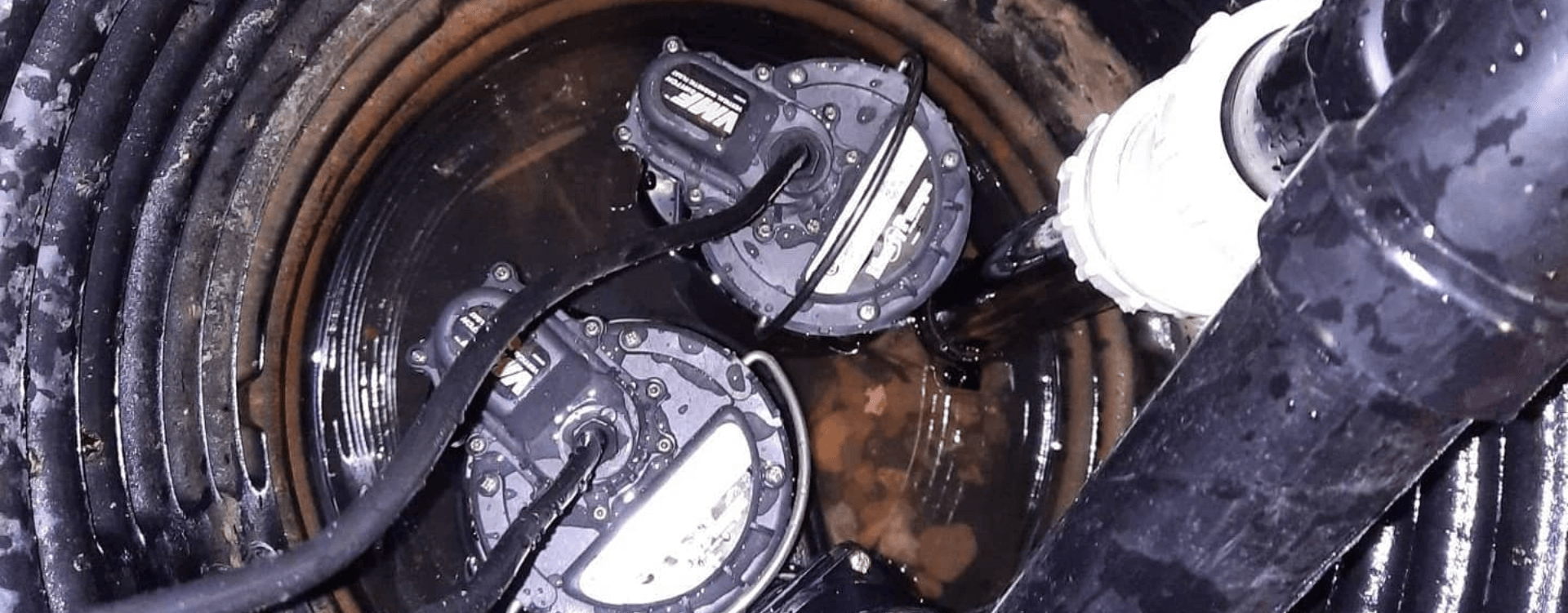
A sump pump that ran fine last April may not start this year if it has not been tested
Sump pumps sit in a pit in the basement floor and activate when groundwater rises above a set level. During spring thaw, the sump pump may run frequently for weeks as the water table rises around the foundation. The rest of the year, it may not run at all.
A pump that sits idle for months can develop a stuck float switch, a corroded impeller, or a seized motor. The homeowner discovers the failure when the basement begins to flood, which is the worst possible time to learn that the sump pump is not working.
Testing the sump pump by pouring water into the pit to trigger the float switch is a simple check that should be performed every spring before the thaw begins and again in the fall before the pump goes dormant for the winter. A maintenance visit includes this test along with an inspection of the discharge line to confirm it is clear and draining away from the foundation.
Fall is when outdoor hose bibs, exposed pipe runs, and the water heater need attention before the freeze
Before the first freeze of the season, every outdoor hose bib should be disconnected from its garden hose, drained, and shut off at the interior shutoff valve if one is installed. A hose left connected to an outdoor faucet traps water in the pipe behind the bib, and that water freezes and expands when temperatures drop below zero.
Fall is also the time to inspect any pipe runs in unheated spaces, including garages, attics, and crawl spaces, for adequate insulation. Pipes that were vulnerable to freezing last winter will freeze again unless the insulation or heat protection is improved.
The water heater should receive a fall inspection that includes testing the temperature and pressure relief valve, checking the anode rod condition on tank models, and flushing sediment from the bottom of the tank. According to Natural Resources Canada, water heaters account for approximately 17 percent of the energy used in the average Canadian home, and maintaining them properly ensures they operate at their rated efficiency throughout the heating season.
- Disconnect and drain all garden hoses from outdoor faucets before the first freeze
- Close the interior shutoff valve to each outdoor hose bib and open the exterior faucet to drain residual water
- Test the sump pump by pouring a bucket of water into the pit and confirming the pump activates, runs, and shuts off properly
- Flush the water heater tank to remove sediment that reduces efficiency and shortens the unit’s service life
Drain maintenance prevents the slow buildup that turns into a full backup
A drain that works today does not mean the drain will work next month. Buildup inside drain pipes is progressive, and by the time the drain slows enough to notice, the restriction has been developing for weeks or months.
A drain that takes longer to empty this month than last month is not clearing itself
A drain that is slowing down is partially obstructed. The obstruction is growing, not shrinking. Grease, soap residue, hair, food particles, and mineral deposits accumulate on the interior pipe walls and narrow the opening progressively.
Homeowners who notice a drain taking a few extra seconds to empty and assume it will sort itself out are watching the early stage of a blockage that will eventually produce a full backup. The earlier the drain maintenance is scheduled, the simpler and less costly the cleaning.
A professional drain cleaning removes the buildup from the full circumference of the pipe, which restores the pipe to its original internal diameter. This is fundamentally different from plunging or using a household drain snake, both of which punch a hole through the centre of the blockage without removing the lining of grease and scale that will rebuild around the opening.
Tree roots find clay pipe joints and grow into them quietly between spring and fall
Oshawa’s mature residential neighbourhoods are lined with large trees whose root systems extend well beyond the visible canopy. When those root systems encounter a clay sewer pipe joint that is leaking even a small amount of moisture, the roots grow toward and eventually into the pipe.
Root intrusion is a progressive condition. Fine root tendrils enter through a joint gap in spring, grow rapidly through the summer, and by fall they have formed a mass inside the pipe that catches debris and restricts flow. The homeowner may not notice the restriction until the following spring, when heavy water use or snowmelt pushes the system past what the restricted pipe can handle.
A camera inspection of the main sewer line identifies root intrusion before it produces a backup. Periodic root cutting and line maintenance keeps the pipe open between more permanent repair solutions such as trenchless lining or pipe replacement.
Camera inspection on the main drain line shows what snaking and flushing cannot
Snaking a drain line clears the immediate blockage, but it does not reveal what caused the blockage or whether the pipe itself is damaged. A camera inspection provides a visual record of the entire drain line, from the house to the municipal connection, showing the interior condition of the pipe in real time.
What a camera inspection of the main drain line reveals:
- Grease buildup lining the pipe walls that will cause a recurring blockage if not removed by hydro jetting
- Root intrusion at joint connections, with the extent and density of the root mass visible on screen
- A pipe belly, which is a low spot where the pipe has sagged and created a trap that collects debris
- Cracked, collapsed, or offset pipe sections that require structural repair rather than cleaning
- Mineral scale buildup that reduces flow capacity and indicates long-term maintenance needs
The camera inspection turns a guessing game into a documented evaluation. The homeowner sees exactly what the plumber sees and can make informed decisions about cleaning, repair, or replacement based on the actual condition of the pipe.
What a plumbing maintenance visit actually checks and why each item matters
A plumbing maintenance visit is not a general walkthrough. It is a structured inspection of specific components, each selected because it represents a common failure point that produces expensive damage when left unchecked.
The water heater gets a pressure relief test and a sediment check that most homeowners skip
The temperature and pressure relief valve on a water heater is a safety device designed to release water if the pressure or temperature inside the tank exceeds safe levels. If this valve fails, the tank can over-pressurize, which creates a serious safety risk.
Testing the T&P valve involves lifting the lever briefly to confirm that water flows freely through the discharge pipe and that the valve reseats properly when released. A valve that does not release water, that drips continuously after testing, or that shows heavy mineral encrustation around the seat needs to be replaced.
Sediment that accumulates at the bottom of the tank insulates the water from the heating element or burner, which forces the water heater to work harder and run longer to reach the set temperature. Flushing the tank through the drain valve removes this sediment and restores the unit’s heating efficiency. An ENERGY STAR certified storage tank water heater uses approximately 14 percent less energy than a standard model, according to Natural Resources Canada, but even an efficient unit loses that advantage when sediment accumulation degrades its performance.
Every shutoff valve in the house gets tested because a valve that will not turn is useless in an emergency
A shutoff valve that has not been turned in five or ten years may be seized from corrosion, mineral buildup, or degraded packing material. The homeowner discovers this when a supply line bursts or a fixture develops a leak and the valve will not close to stop the flow.
During a maintenance visit, the plumber operates every accessible shutoff valve in the house, including the main shutoff, the water heater shutoffs, and the individual fixture valves under sinks and behind toilets. A valve that is stiff, leaking from the packing nut, or does not close fully is identified and can be repaired or replaced before it is needed in an emergency.
- The main shutoff valve controls all water entering the house and must operate freely at all times
- Water heater shutoff valves on both the hot and cold connections must close completely to allow safe service or emergency isolation
- Fixture shutoff valves under every sink and behind every toilet should turn smoothly and stop water flow completely when closed
- Outdoor hose bib shutoff valves, where installed, should be tested in the fall and left in the closed position for winter
The plumbing services call that finds nothing wrong is the one that saved you the most
A maintenance visit that produces no repair recommendations is not a wasted appointment. It is confirmation that every component checked is operating within normal parameters and that no concealed condition is developing toward a failure.
The visit that finds a supply valve seeping before it fails, a sump pump float switch stuck before the spring thaw, or a water heater anode rod depleted before the tank begins corroding internally prevents the emergency that would have cost several times more than the maintenance appointment.
Homeowners who schedule annual plumbing services visits consistently spend less on plumbing over time than homeowners who only call when something breaks. The maintenance model catches problems in their earliest, least expensive stage. The emergency model catches them at their most advanced and most costly.
Cardinal Home Services offers the Cardinal Care Club, a maintenance plan that includes annual inspections and priority scheduling, designed to keep Oshawa homes ahead of the problems rather than responding to them after the damage is done.
Conclusion
Plumbing maintenance in Oshawa is the difference between a system that works reliably year after year and one that produces expensive surprises at the worst possible time. The pipes, valves, fixtures, and equipment behind the walls and under the floors of an Oshawa home are aging on their own schedule, and the only way to know their condition is to check them before they fail.
Seasonal stresses, including spring sewer surcharges, summer storms, and winter freeze conditions, each target different components of the system. A maintenance plan that addresses each season’s specific risks keeps the sump pump ready, the backwater valve functional, the water heater efficient, and the drain lines clear.
If your Oshawa home has plumbing you have not had inspected in the past year, or if you have noticed slower drains, lower pressure, or a sump pump you have not tested since last spring, contact Cardinal Home Services to schedule a plumbing maintenance visit before the next season reveals what the system has been hiding.