


If you have lived around Peterborough for more than a few winters, you have probably noticed something. The snow does not pile up the way it used to, but the power still seems to flicker and fail just as often, sometimes more.
That is not your imagination. A milder, wetter winter is driving backup generator demand in Peterborough and across the wider Kawartha region, and the reason has everything to do with what a changing winter actually looks like on the ground, not in the forecast.
Milder does not mean calmer. More of our winter precipitation now falls as rain or freezing rain instead of snow, and ice is far harder on power lines, trees, and transformers than a foot of fluffy snow ever was.
For a Peterborough homeowner, that shift is not an abstract climate statistic. It is the night the power goes out during an ice storm and stays out long enough for the well pump to stop, the sump pump to sit silent, and the furnace to go cold. That is exactly why more homeowners across Peterborough, Lakefield, Clarington, and the Kawartha Lakes are asking Cardinal Home about backup generators, often for the first time.
This piece walks through why Peterborough’s winters are changing and what that shift means for your home’s power supply. A properly sized backup generator installation keeps your well, your furnace, and your basement running long after a storm has knocked out the grid.
In this article, you will learn about:
- How Peterborough’s winters are quietly changing
- What a wetter winter means for the power grid around Peterborough
- What’s actually at risk in your home when the power goes out
- Choosing and installing the right backup generator
Keep reading to see exactly which parts of your home are vulnerable during a winter outage, and how to size and install a generator that actually solves the problem.
How Peterborough’s winters are quietly changing
Peterborough’s winters have not disappeared, but they have changed character. Average winter temperatures across south-central Ontario have climbed enough that a larger share of what used to fall as snow now falls as rain, freezing rain, or a messy mix of both.
That matters more than it sounds. A milder winter does not mean a quieter one for your home’s electrical system, it often means the opposite, because ice and wet, heavy snow do more damage to power infrastructure than dry cold ever did.
More rain and freezing rain instead of snow
Regional meteorologists have noted that Ontario winters are trending toward more rain and freezing rain events relative to snow, a pattern tied to warmer air holding more moisture and more days hovering near the freezing mark instead of staying solidly below it.
For the Kawarthas, that means more days where precipitation starts as rain, meets a cold surface, and turns into a glaze of ice on roads, trees, and power lines rather than a clean, dry snowfall that simply piles up and melts later.
A single freezing rain event can leave behind:
- A coating of ice over every branch and wire in its path
- Tree limbs heavy enough to snap under their own added weight
- Power lines sagging or snapping under that extra load
- Roads and driveways glazed over for days afterward
None of this requires a blizzard. A single overnight freezing rain event can do more damage to the local grid than an entire snowy week, which is part of why outages now show up on milder nights almost as often as on the coldest ones.
That is the real shift behind the headlines. Peterborough is not necessarily getting colder or snowier, it is getting wetter and icier, and the power grid feels that difference first.
Ice storms and wind gusts are the new winter threat
Ice storms get most of the attention, and rightly so, but wind is doing more of the damage than most homeowners realize. A stretch of freezing rain followed by a gusty front is a particularly rough combination for overhead lines already weighed down with ice.
Utilities across Ontario have been investing heavily in vegetation management and line hardening specifically because this combination, ice plus wind, is becoming a more frequent cause of multi-hour and multi-day outages rather than the occasional deep freeze.
That combination explains why local outage reports increasingly cite ice and wind rather than heavy snow as the trigger, a subtle shift that matters when you are deciding how seriously to take a backup power plan.
Why a milder winter can still knock out your power
It is a fair question. If winters are milder overall, should outages not go down? In practice, the opposite tends to happen, because the specific weather that knocks out power, ice, wind, and freeze-thaw cycling, becomes more common even as the season’s average temperature climbs.
The City of Ottawa projects winter freeze-thaw cycles across the wider capital region climbing by roughly 35 percent within a few decades, a trend playing out across much of south-central and eastern Ontario, including the Peterborough area.
That is the paradox worth sitting with. The days getting dangerously cold are becoming less frequent, but the specific conditions that trip breakers and snap lines are becoming more frequent, which explains why backup power has moved from a nice-to-have to a real need for a growing number of Peterborough households.
A storm that falls short of knocking the power out completely can still leave you with circuit breakers that trip repeatedly as voltage fluctuates during the event, a different but related headache from a full outage.
Flickering lights, warm outlets, or breakers that trip for no obvious reason after a storm are worth a call for electrical service rather than something to wait out until the next failure.
What a wetter winter means for the power grid around Peterborough
Understanding why winters are changing is only half the picture. The other half is what that change actually does to the physical grid that keeps your lights on, your furnace running, and your well pump pressurized.
Rural and semi-rural service areas like Peterborough, Kawartha Lakes, and Northumberland County are especially exposed, since long stretches of overhead line pass through wooded areas where ice-laden branches have plenty of opportunity to come down.
Ice-coated trees and lines cause most outages
Ice is heavy. A single branch coated in a few millimetres of ice can weigh several times what it does bare, and that extra weight is exactly what snaps limbs onto power lines.
Utilities across Ontario consistently report that fallen trees and branches, not equipment failure, are the leading cause of winter outages in rural and treed service areas, which describes most of the Peterborough region.
A typical ice-related outage in this region tends to follow a familiar sequence:
- Freezing rain accumulates on branches and lines overnight
- The added weight causes limbs to snap or lines to sag
- A breaker trips or a line comes down, cutting power to a section of the grid
- Crews have to clear debris before repairs can even begin, extending the outage
That sequence is why ice-related outages often last far longer than a simple equipment fault. Crews cannot repair a line until downed trees are cleared, and a single storm can produce dozens of blockages across a rural service territory at once.
For homeowners, that translates directly into longer waits, often well past the point where food spoils, pipes start to chill, or a well runs dry without power to the pump.
Saturated ground and wind topple more than snow ever did
Wet winters soften the ground, and saturated soil holds tree roots far less securely than frozen ground does. Pair that with the wind gusts that often follow a warm front, and you get trees toppling over, not just branches breaking off.
This is a newer pattern for the region. A few decades ago, a frozen winter landscape actually protected against some wind damage, since the ground itself was solid. A milder, wetter winter removes that protection at exactly the time storms are picking up.
In older Kawartha Lakes homes, wiring already stretched thin by decades of service is especially vulnerable when a toppled tree or a sagging line sends a surge back through the system, and electrical repairs after a storm often uncover problems that predate the event entirely.
Outages are lasting longer, not just happening more often
It is not only frequency that has shifted, duration has too. A downed line in a treed, rural stretch can take crews considerably longer to reach and repair than the same fault in a dense urban grid.
For a household relying on a well, a sump pump, or an electric furnace, the difference between a two-hour outage and a two-day outage is the difference between an inconvenience and genuine property damage.
A two-day outage in a treed, rural stretch is no longer a rare worst case, it is an increasingly realistic planning assumption for anyone without backup power in this region.
What’s actually at risk in your home when the power goes out
This is where the abstract becomes personal. A power outage is not just dark rooms and a dead phone charger, in a lot of Peterborough and Kawartha homes, it is a direct threat to water, heat, and the systems that keep a basement dry.
Three systems in particular tend to fail fastest and cost the most when the power stays off.
Recognizing these emergency warning signs before a storm arrives, rather than during one, is what separates a manageable outage from a genuine property emergency.
Well water pressure and well pumps
If your home relies on a private well, which is common across Peterborough, Kawartha Lakes, and Northumberland County, your water pressure depends entirely on an electric pump. No power means no water, full stop, regardless of how much is sitting in the well itself.
That affects more than drinking water. Without pump pressure, toilets stop refilling, showers stop running, and if you rely on a pressure tank, you may lose your small reserve within the first few uses after the power cuts out.
A well pump that loses power mid-cycle can also trip a breaker or strain a failing pressure switch, turning a simple outage into a repair call once the lights come back on.
Regular well system maintenance also matters here, since a pump already under strain from age or sediment is far more likely to fail the moment it loses and regains power during a storm.
An aging pressure tank that has lost its air charge drains even faster once the pump stops, leaving you with next to no reserve water during an outage.
Sump pumps and basement flooding
A wetter winter means more groundwater and more freeze-thaw runoff, exactly the conditions that keep a sump pump working overtime. When the power goes out during one of these events, the pump stops the moment the basement needs it most.
A basement that stays dry through a normal winter can take on real water within hours once the sump pump sits idle during a storm, especially if the outage lines up with rapid snowmelt or heavy rain.
In older homes with an aging drainage system, a prolonged outage can also contribute to sewer backup, since ejector and effluent pumps rely on the same electrical supply as a standard sump pump.
Furnaces, boilers, and frozen pipe risk
Most furnaces and boilers in this region need electricity to run, even gas and oil units, since the igniter, blower, and control board all depend on it. A power outage in the dead of winter can mean a cold house within hours, not days.
A cold house is not just uncomfortable, it is a direct path to frozen pipes, particularly along exterior walls or in uninsulated basements and crawl spaces, and a burst pipe during an outage is a far more expensive problem than the outage itself.
Septic systems with a pump, common on rural Kawartha properties without gravity-fed lines, face the same vulnerability. A septic system that relies on an electric pump to move effluent to the field stops functioning the moment the power does, which can back up a system that was otherwise working fine.
Choosing and installing the right backup generator
Once you understand what is actually at risk, the generator conversation gets a lot more practical. The question shifts from whether to get one to what size, what type, and installed how.
There is no single right answer for every home, but there is a clear process for getting to the right one for yours.
Portable generators versus whole-home standby systems
A portable generator is the lower-cost entry point. You wheel it out, fuel it, run extension cords to a few key circuits, such as the furnace, the well pump, and the fridge, and you get through a short outage. It takes manual setup every time, and it is only as reliable as your memory of where you stored the fuel.
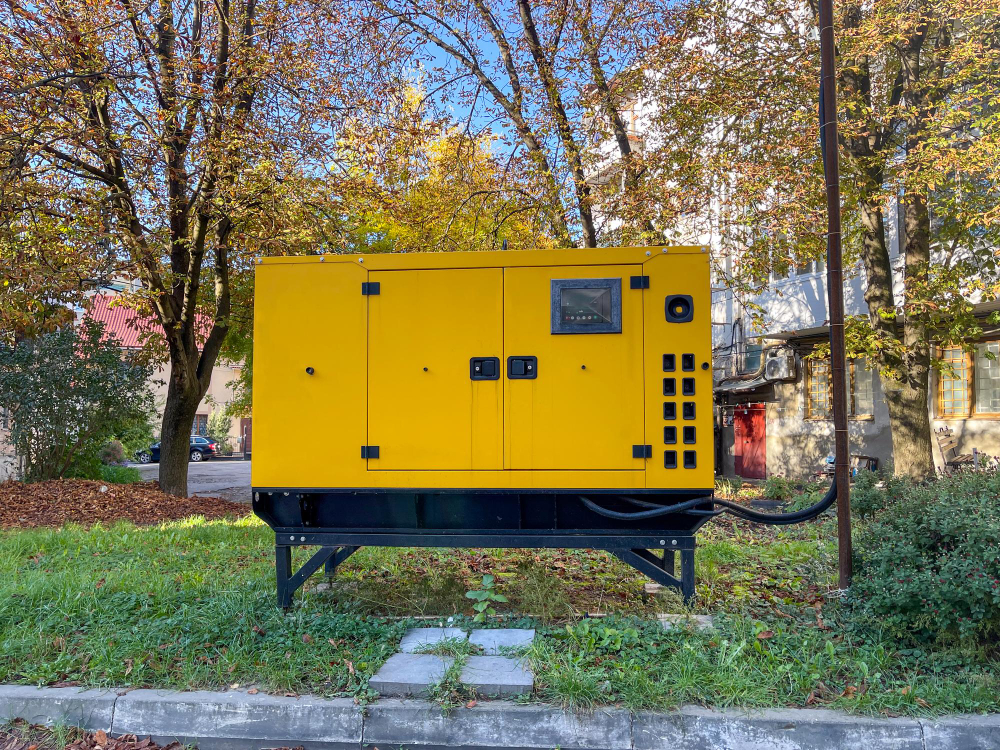
A whole-home standby generator sits permanently outside, runs on natural gas or propane, and starts automatically within seconds of an outage through an automatic transfer switch, powering some or all of the house without you doing anything at all.
The practical trade-offs come down to a few factors:
- Upfront cost: portable units cost far less than a standby system
- Effort during an outage: portable units need manual setup every time, standby systems start themselves
- Coverage: portable units typically run a handful of circuits, standby systems can cover the whole home
- Fuel source: portable units usually run on gasoline, standby systems typically tie into natural gas or propane
For a household that loses power rarely and briefly, a portable unit may genuinely be enough. For a home with a well, a finished basement, or anyone with medical equipment or mobility needs, the automatic coverage of a standby system is usually worth the higher upfront cost.
The right answer often comes down to how much risk you are comfortable carrying during the hours, or days, before a portable unit gets set up and fuelled.
Sizing a generator to match your home’s real needs
Sizing starts with a plain question: what do you actually need powered? A furnace blower, a well pump, a sump pump, a fridge, and a few lights add up to a modest load that a mid-sized generator can handle comfortably.
Whole-home coverage, central air conditioning, electric heat, or a finished basement with its own electrical demands pushes you toward a larger unit. A panel upgrade is sometimes the real bottleneck, not the generator itself, since an older service may already be stretched thin before adding a transfer switch and new circuits.
A proper sizing assessment typically accounts for:
- Starting, or surge, wattage for motors like well pumps and furnace blowers, which draw more power at startup than while running
- Running wattage for everything you want powered continuously
- Circuits you consider essential versus circuits you can live without during an outage
- Future additions, such as a heat pump or an EV charger, that might change your electrical load
This is one area where a professional electrician’s assessment matters more than an online calculator. Startup loads for motors are easy to underestimate, and an undersized generator that stalls under a well pump’s startup surge defeats the entire purpose of having one.
A proper load calculation, done once by someone who knows your panel and your appliances, saves you from either outcome.
Installation, permits, and keeping it ready for the next storm
A standby generator installation in Ontario typically requires an electrical permit, a gas or propane line sized for the unit, proper clearance from windows and doors for exhaust safety, and a transfer switch wired into your main panel by a licensed electrician.
Skipping any of these steps is not a shortcut, it is a liability and a safety risk, particularly around carbon monoxide, which is why a generator installation is not a reasonable do-it-yourself weekend project.
A standard standby generator installation in this region typically moves through a consistent sequence:
- A site assessment to confirm placement, clearances, and fuel source
- Securing the required electrical and gas or propane permits
- Setting the pad and running the gas or propane line to the unit
- Installing the transfer switch and tying it into your main panel
- A final inspection and test run before the unit goes into service
A properly permitted generator installation also typically includes a transfer switch that automatically isolates your home’s wiring from the utility grid, protecting line crews working to restore power nearby.
Older homes, especially those with an aging electrical panel, may need an upgrade before a standby generator and its transfer switch can be added safely.
Homeowners in older Northumberland County properties benefit from a broader electrical safety review alongside any generator planning, since outdated or underrated wiring complicates a safe transfer switch installation.
Once installed, a generator is only as reliable as its upkeep. Generator maintenance is not a one-time task, batteries weaken, fuel degrades, and a unit that has not run in months can fail silently until the one night you actually need it.
Homeowners who already own a generator benefit from a pre-season generator check, running through fuel, battery charge, and a quick test start before the first ice storm of the year rather than during it.
Conclusion
Peterborough’s winters are not getting easier on your home’s power supply, even when they feel milder outside. More rain, more freezing rain, and more wind gusts add up to a grid that fails more often and takes longer to come back, and that reality now reaches into your well, your basement, your furnace, and even your septic system the moment the lights go out.
A backup generator will not change the weather, but it changes what an outage actually costs you, in spoiled food, frozen pipes, a flooded basement, or days without water from a well that has plenty of water sitting untouched underground. The right system, sized and installed properly, turns a stressful night into a minor inconvenience.
If you are weighing a portable unit against a whole-home standby system, or you already own a generator that has not been serviced in a while, Cardinal Home can walk you through the options and make sure whatever you choose is sized, installed, and maintained the right way. Contact Cardinal Home to talk through what backup power looks like for your specific home.