


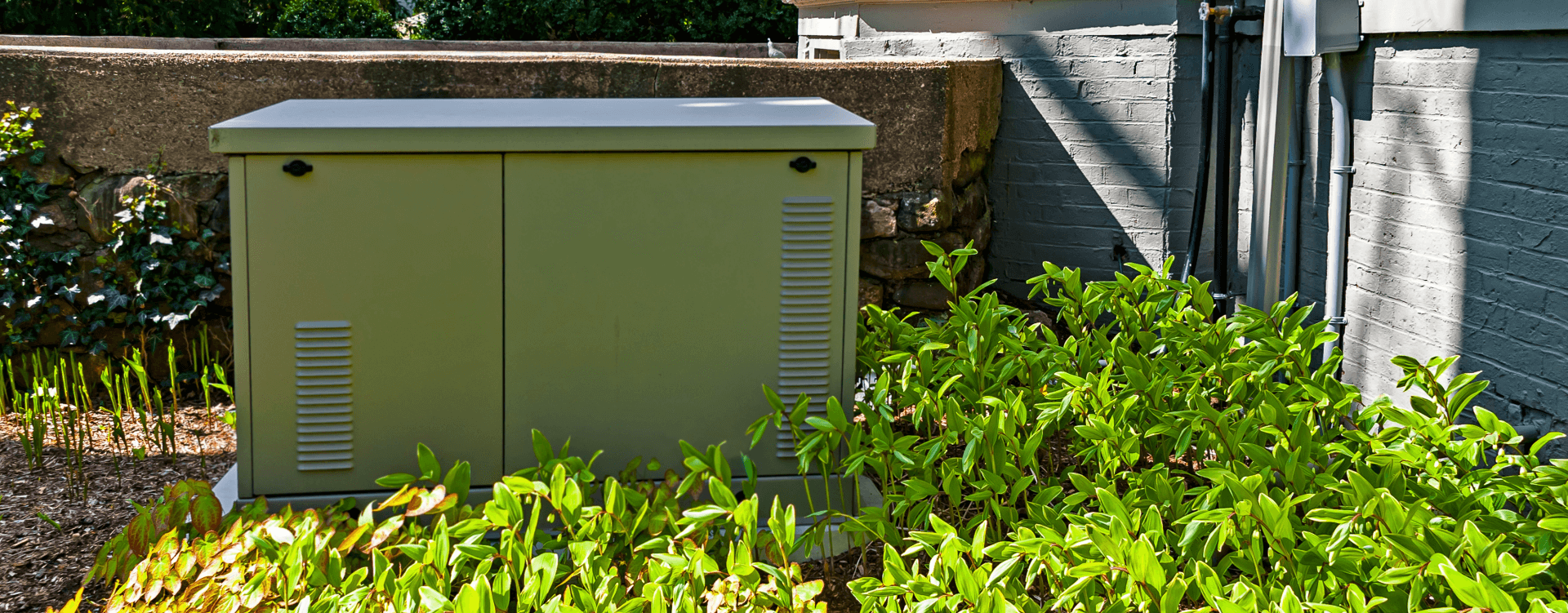
Signs your home generator needs servicing are easy to miss, mostly because a generator that is not running rarely announces a problem the way a leaking pipe or a tripped breaker does. It just sits there, quiet, until the one night you actually need it.
Winter is when that quiet problem turns into a real one. Cold temperatures, ice-loaded power lines, and longer outages are exactly the conditions a neglected generator is least prepared to handle, and exactly the conditions where backup power matters most.
Most generator failures during an actual outage were not sudden. They were small, ignorable symptoms that had been building for months, sometimes longer, before the unit was finally asked to perform under real load.
This guide walks through the warning signs worth taking seriously before the cold weather arrives, not after. Regular generator maintenance is the difference between a unit that starts reliably and one that becomes a surprise the first time it is actually needed.
In this article, you will learn about:
- Why winter is the test a neglected generator fails
- Signs the engine and fuel system are already struggling
- Signs the electrical side needs attention
- What a pre-winter service visit actually covers
Keep reading so the first real test of your generator this winter isn’t also the first time anyone noticed something was wrong.
Why winter is the test a neglected generator fails
A generator can sit through a mild summer without ever revealing a problem simply because it was never asked to do much. Winter changes that equation completely, and usually at the worst possible moment.
Understanding why cold weather exposes neglect so quickly explains why a pre-winter check matters more than a check at any other time of year.
Cold makes small problems obvious fast
Cold temperatures thicken oil, strain batteries, and make a weak fuel system or a tired starter motor fail in exactly the conditions where a generator is needed most. A problem that barely showed up in August can stop the unit cold in January.
Severe winter weather events are also when the stakes rise sharply, since an extended outage from an ice storm is a very different situation than a brief summer blip. Some areas affected by Canada’s 1998 ice storm, still the benchmark for what a genuinely severe, extended outage looks like, went up to four weeks without power according to a Public Safety Canada report on the event.
An outage of that length is rare, but even a few days without power in sub-zero temperatures turns a non-functioning generator from an inconvenience into a genuine safety problem for pipes, heating, and anyone in the home with medical equipment.
The gap between “runs” and “ready”
A generator that starts when you test it briefly in good weather is not the same thing as a generator that is actually ready for a multi-day winter outage. Plenty of units start fine for thirty seconds and then struggle, stall, or underperform once asked to carry real load for hours at a time.
This gap is exactly why a quick visual check or a brief start-up test gives false confidence. A whole home generator is only as reliable as its last real service, not its last successful thirty-second start.
The difference between “it ran” and “it’s ready” usually only shows up under conditions nobody wants to test for themselves, which is exactly why a proper service check exists in the first place.
What a mid-outage failure actually costs you
A generator that fails partway through a winter outage does not just mean going back to candles and blankets. It means every system that depended on it stops at once, often at the point in the outage when conditions have already gotten worse, not better.
A home relying on a well for water feels this immediately. A well pump repair call during an outage is sometimes less about the pump itself and more about a generator that quit partway through and took water access down with it.
Properties with a pumped septic system face a similar risk. A septic system service visit after a failed backup generator sometimes turns up a system that backed up simply because the effluent pump had nowhere to send power once the generator stopped.
Signs the engine and fuel system are already struggling
The engine and fuel system are usually where trouble shows up first, since they are the components under the most mechanical stress every time the unit runs. Catching an issue here early is almost always cheaper and simpler than catching it later.
A few specific symptoms are worth taking seriously rather than writing off as normal wear.
Trouble starting, or not starting at all
A generator that needs multiple attempts to start, cranks slowly, or occasionally fails to start altogether is already telling you something, even if it eventually catches on the third or fourth try.
A few common causes explain most starting problems:
- A weak or failing battery that no longer holds enough charge for cold-weather starts.
- Stale fuel that has degraded since the last time the unit actually ran under load.
- A clogged fuel filter restricting flow right when the engine needs it most.
None of these problems fix themselves, and most of them get worse specifically in cold weather, which is exactly when a slow or failed start matters the most.
Rough running, stalling, or uneven power
A generator that starts fine but runs roughly, surges, or stalls under load is showing signs of a deeper issue, even if it technically “works” for a short test run. Uneven power output can also damage sensitive electronics plugged into the circuit, which makes this more than a minor annoyance.
Loose or corroded connections at the panel are a common, often overlooked contributor to uneven power delivery. An electrical panel connection that has loosened over time can make a perfectly healthy generator look like it is the one malfunctioning.
Catching this early matters because a generator working harder than it should to maintain steady output wears out faster across the board, shortening its usable life well before it should need replacing.
Fuel smell, residue, or a visible leak
A persistent fuel smell around the unit, visible residue on or near the generator, or an actual puddle underneath are not symptoms to wait out until the next scheduled service.
A few specific signs point to fuel system trouble worth acting on right away:
- A strong fuel odour that lingers well after the unit has shut down.
- Dark, oily residue building up around fittings or hose connections.
- A visible puddle or damp patch on the ground beneath the unit.
Fuel system issues carry real safety risk alongside the performance problem, since a leak near a running engine introduces fire risk that goes well beyond an inconvenient repair bill.
Any of these signs warrants shutting the unit down and having it looked at promptly, rather than continuing to run it while hoping the smell fades or the residue dries up on its own.
Signs the electrical side needs attention
The electrical components connecting a generator to the house are just as important as the engine itself, and problems here are often more dangerous precisely because they are easier to overlook.
A generator that runs perfectly but cannot deliver power safely to the home is not actually a working backup system.
The transfer switch isn’t doing its job
A transfer switch that hesitates, fails to engage fully, or does not switch back cleanly once utility power returns is a serious issue, not a minor quirk to live with.
This component ties directly into the home’s electric service entrance, and a switch that is not functioning correctly can mean power never actually reaches the house circuits during an outage, even while the generator itself runs fine outside.
A transfer switch problem is also one of the few generator issues that genuinely should not wait for a routine appointment, given what is riding on it working correctly the moment it is actually needed.
Unusual noises, smoke, or a burning smell
A generator that develops a new grinding, knocking, or high-pitched noise is communicating a problem, even without a diagnostic tool attached. The same goes for any visible smoke or a burning smell, electrical or otherwise, coming from the unit.
A few sounds and smells are worth treating as an immediate stop-and-check signal rather than something to monitor over a few more runs:
- A grinding or knocking sound that was not there during the last known good run.
- Any visible smoke, however light, coming from the unit or nearby wiring.
- A sharp, acrid smell distinct from normal exhaust or fuel odour.
These symptoms sometimes point beyond the generator itself and into the home’s own wiring. Electrical home repair sometimes gets scheduled alongside a generator service call once a technician traces a smell or a noise back to a connection point inside the house rather than the unit itself.
Any burning smell in particular should be treated as an immediate shutdown situation, not something to monitor for a few more test runs first.
Warning lights or error codes you’ve been ignoring
Most standby units display warning lights or error codes for a reason, and a code that has been blinking for weeks without being addressed is not going to resolve itself.
A few patterns are worth connecting directly to the home’s wiring rather than treating as a generator-only issue.
- A recurring low-battery warning, which often points to a charging system issue rather than the battery alone.
- A code tied to load or output, which can trace back to circuit breakers that keep tripping somewhere in the connected system.
- A persistent fault code after a reset, which almost always means the underlying issue was never actually fixed.
Homes with older wiring see this pattern more often than newer builds. Electrical repair elsewhere in the house sometimes resolves a generator fault code that had nothing to do with the generator itself.
What a pre-winter service visit actually covers
A proper pre-winter service is not the same thing as glancing at the unit and confirming it starts. It is a structured check that catches the specific things cold weather and real load tend to expose.
Knowing what should actually happen during that visit helps you tell a thorough service from a quick once-over.
The checklist a proper visit runs through
A thorough pre-winter visit covers several areas most homeowners would not think to check themselves.
- Battery condition and charging system performance under a real load test.
- Fuel quality, fuel lines, and filters, replacing anything showing early wear.
- Oil level and condition, along with a check of the air filter and spark components.
- Transfer switch operation, confirmed through an actual simulated outage, not just a visual check.
Anyone whose generator was sized or set up before a household’s power needs changed should raise that during the visit too. Home generator installation decisions made years earlier do not always account for equipment added since, and a service visit is a natural point to flag that gap.
What only shows up under real load
Some problems simply do not appear during a quick start-up test, no matter how carefully it is performed. A unit can start perfectly and still fail within minutes once it is actually carrying a real household load.
This is exactly why a proper service includes a load test rather than stopping at a successful start. An electrical panel upgrade sometimes gets identified this way, when a load test reveals the panel itself is the limiting factor rather than the generator.
A technician running this kind of test is looking for exactly the failure pattern that would otherwise only show up during an actual outage, which defeats the entire purpose of having backup power in the first place.
Scheduling it before the rush, not during it
Generator technicians get busiest right as the first real cold snap or storm warning hits, which is exactly the moment availability disappears and wait times stretch out.
Preparing your generator before that rush starts means an actual appointment on a normal schedule, rather than a waiting list once the forecast turns.
Older homes add one more reason not to wait. Electrical safety issues tied to aging wiring tend to surface the moment a generator puts real load on a panel, and those are easier to address calmly in the fall than urgently in the middle of a January outage.
Conclusion
A generator that has not been properly serviced is not a reliable backup system, it is an expensive guess about what will happen the first time it is actually needed. The signs covered here, from starting trouble and rough running to transfer switch issues and ignored warning lights, rarely appear out of nowhere. They build quietly until winter conditions finally expose them.
Catching these signs before the cold weather arrives, rather than during the first storm of the season, is the difference between a backup system that actually works and one that becomes a second emergency layered on top of the first.
If any of this sounds familiar, or it has simply been a while since your generator was properly checked, now is the time to deal with it. Reach out to Cardinal Home to book a pre-winter service before the next cold snap puts your generator to the real test.