


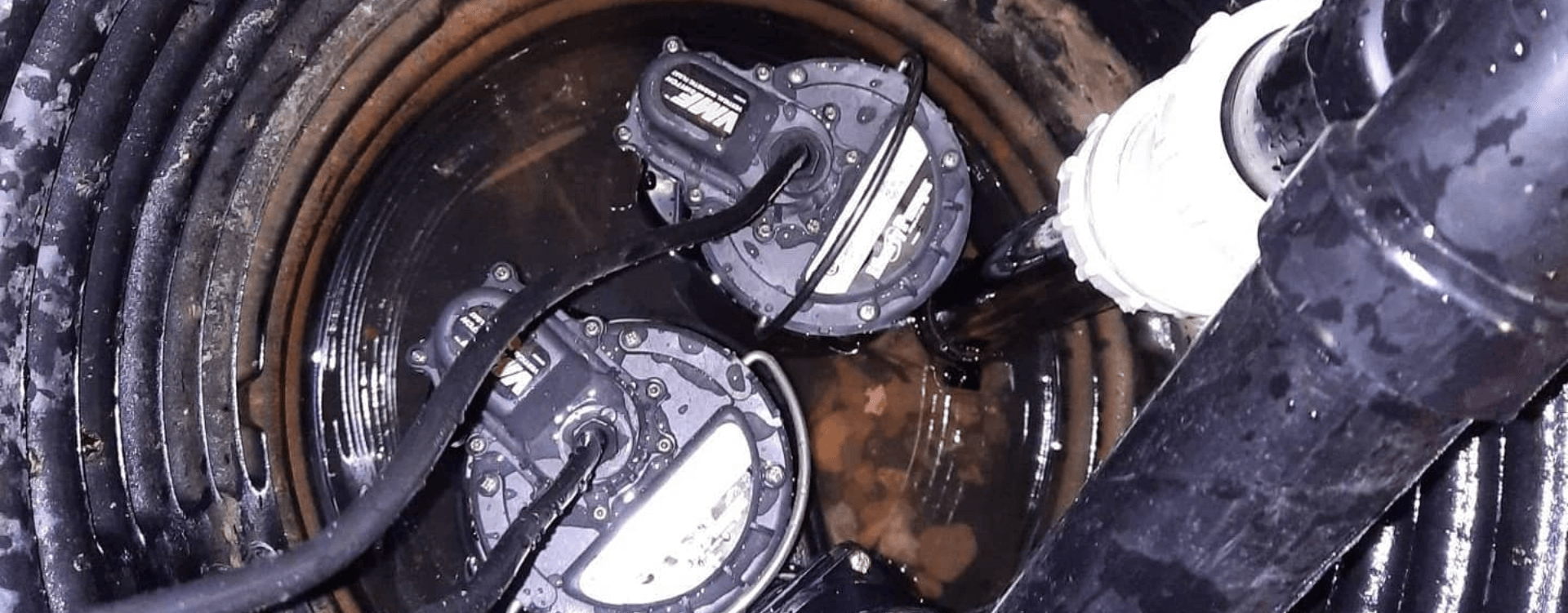
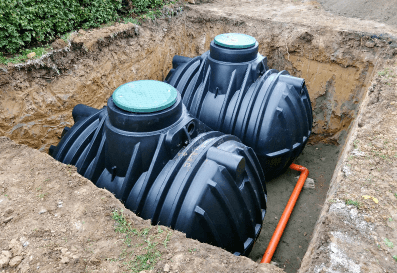
A cesspool is a simple underground pit that collects raw sewage and lets it slowly leach into the surrounding soil, with little to no actual treatment happening along the way. If you have ever come across the term while researching an older Peterborough or Kawarthas property, that basic definition is the starting point for everything else worth knowing.
Many homeowners assume cesspool is just another word for septic tank, and the confusion is understandable since both sit underground and both handle wastewater from the same house. The two systems work in very different ways, though, and that difference matters a great deal once you start talking about legality, cost, and what happens if the system fails.
This guide covers what a cesspool actually is, how it compares to a modern septic tank, whether one is still legal to have on your property, and what to do if you discover you have one. Understanding these basics first makes any conversation about septic system service far more useful.
In this article, you will learn about:
- What is a cesspool, exactly
- Are cesspools legal in Ontario
- How to tell if your property has a cesspool
- What to do if you have a cesspool
Keep reading to find out whether the older system on your property still meets code, and what your options look like if it does not.
What is a cesspool, exactly
A cesspool is essentially a covered pit, sometimes lined with open-jointed brick, block, or precast concrete rings, that receives raw sewage directly from the house. There is no primary treatment stage, no separation of solids from liquids in a dedicated tank, and no leaching bed spreading the effluent evenly across a wider area.
Instead, sewage flows into the pit and the liquid portion seeps directly into the surrounding soil through the open joints in the pit’s walls. Solids settle at the bottom and slowly break down, but without the two-stage settling process a proper septic tank provides.
How a cesspool works
The mechanics are about as simple as onsite sewage treatment gets. Wastewater from toilets, sinks, and drains flows into the pit through a single inlet pipe, and from there gravity and soil porosity do the rest of the work.
Because there is only one chamber and no outlet to a separate leaching bed, all of the treatment that happens, such as it is, takes place in that single space. The soil immediately surrounding the pit ends up doing double duty as both the treatment medium and the disposal point, which is exactly why cesspools carry a much higher groundwater contamination risk than modern systems.
Cesspool versus septic tank
A septic tank separates the sewage treatment process into distinct stages. Solids settle in a sealed, watertight tank, bacteria break down organic material over time, and only the clarified liquid effluent moves on to a leaching bed, where it is distributed evenly across a wider area of soil before final absorption.
That extra structure changes everything about performance and risk.
- A cesspool has one chamber, no separate treatment stage, and no leaching bed
- A septic tank has at least two compartments, dedicated solids settling, and a separate leaching bed for the treated liquid
- A cesspool relies on the pit’s own sidewalls for both storage and leaching
- A septic tank relies on the tank for storage and treatment, with leaching handled entirely by the bed downstream
The practical result is that a septic tank spreads risk and workload across two systems working together, while a cesspool concentrates everything, including the contamination risk, in one small footprint of soil.
Where the term still shows up today
You will rarely see a cesspool proposed for new construction anywhere in Ontario, but the term still comes up regularly during property purchases, renovations, and septic inspections on older rural and cottage properties. Many homes and cottages built decades ago, particularly around the Kawarthas, were originally serviced by a cesspool long before modern sewage system standards existed.
It is also worth knowing that the word gets used loosely in everyday conversation, sometimes applied to any old or poorly maintained septic system regardless of its actual design. A proper inspection is the only reliable way to know which one you are actually dealing with.
Are cesspools legal in Ontario
Cesspools are not banned outright in Ontario, but they occupy a narrow and shrinking legal category. The Ontario Building Code still recognizes them, just not in the way most homeowners expect.
Under Ontario’s sewage system classification, a cesspool falls under Class 3, and the City of Peterborough’s own building permit guidance defines a Class 3 system as a sewage system used for the disposal of human body wastes, commonly referred to as a cesspool, with a permit required for its construction. Ontario’s Building Code recognizes five distinct sewage system classes in total, and a cesspool is the only one of those five with no dedicated treatment stage before disposal. That classification confirms the term has a specific legal meaning in Ontario, not just a colloquial one.
Cesspools under the Ontario Building Code
The Ontario Building Code sets out detailed construction requirements for any cesspool that does exist, covering everything from sidewall material to groundwater clearance. According to Algoma Public Health’s summary of the code, the bottom of a cesspool must sit at least 900 millimetres above the high groundwater table, and the pit must be surrounded on all sides and its bottom by at least 600 millimetres of soil or leaching bed fill.
Those clearance numbers exist for a reason. A cesspool that sits too close to groundwater, or that lacks adequate surrounding soil to filter the effluent, turns a slow leaching process into a direct pathway for untreated sewage to reach the water table.
Permits and Class 3 sewage systems
A permit is required to construct a Class 3 sewage system, the same as any other class recognized under the Ontario Building Code. That permit requirement applies whether the system is brand new or being repaired in a way that constitutes new construction under the code.
- Confirm the system’s class with your local building department before assuming anything
- Request any existing permit or inspection records tied to the property
- Treat verbal assurances from a seller as a starting point, not a substitute for verification
Skipping that verification step is one of the more common regrets homeowners describe after buying an older rural property, since problems that were invisible during a walkthrough tend to surface only once the system is already in daily use.
Why new cesspools are rarely approved
Even though the Building Code still technically recognizes Class 3 systems, approval for a brand new cesspool on a residential property is uncommon in practice. Modern site evaluation standards, groundwater protection requirements, and the availability of proven Class 4 septic tank and leaching bed designs mean a cesspool rarely clears the bar as the best available option for a new build.
In most cases today, a cesspool only exists because it predates current standards, not because it was chosen over a modern alternative. That distinction matters when you are deciding whether to repair an aging system or replace it outright.
How to tell if your property has a cesspool
Cesspools do not come with an obvious label, and many homeowners genuinely do not know which type of sewage system they have until something prompts a closer look. A property purchase, a renovation permit application, or a slow-draining fixture that will not clear are the three most common triggers.
Age is one of the strongest clues. A property with a sewage system installed before modern Class 4 standards became the norm, particularly a rural home or cottage that has changed hands only once or twice, is a reasonable candidate for a cesspool rather than a true septic tank.
Signs on older Peterborough and Kawartha properties
A single access lid with no visible second chamber, no record of a leaching bed on the property survey, or a sewage system marked simply as a pit or seepage pit on old paperwork are all signs worth investigating further. Properties near well water sources deserve particular attention, since a failing cesspool close to a private well creates a direct contamination pathway between the two systems.
Cottage properties around the Kawarthas carry extra risk here, since many were built for seasonal use decades ago under standards that no longer apply to any new construction.
What a professional inspection reveals
A visual walkthrough alone cannot confirm what kind of system sits underground. A proper inspection involves locating the access point, assessing the structure and condition of the chamber, and checking whether a separate leaching bed exists downstream at all.
That inspection also reveals how close the system sits to the groundwater table and whether current clearance requirements are being met, which is not something a homeowner can reliably eyeball from the surface. Local septic service providers who work regularly on older Kawartha properties tend to spot the telltale signs of a cesspool quickly, simply from having seen the pattern before. A related main drain cleaning visit sometimes uncovers the same clues, since a technician working inside the drain often gets the first look at what the sewage system is actually connected to.
Why cesspools fail more often than septic systems
Cesspools fail at a higher rate than modern septic systems for a straightforward reason. All of the treatment burden sits in one small area of soil, and that soil eventually clogs with the same biological mat that would otherwise be spread across an entire leaching bed.
Once the surrounding soil clogs, the pit stops absorbing liquid effectively, and sewage either backs up into the house or surfaces around the pit itself. A few conditions tend to accelerate that failure on Kawartha properties specifically.
- Heavy seasonal water use, especially during summer cottage occupancy, that pushes more volume through the pit than it was ever sized for
- Clay-heavy or poorly draining soil common across parts of Peterborough and the Kawarthas, which slows leaching even in a healthy system
- Years of deferred maintenance on a system that was never designed to be inspected or pumped the way a proper septic tank is
Statistics Canada’s own household data shows that a private septic system serves roughly 13 percent of Ontario households, a meaningful share of the province that depends on some form of onsite treatment working correctly year after year. A cesspool within that group carries a higher chance of ending up in that failure category than a modern Class 4 system does, simply because of how it was built.
What to do if you have a cesspool
Finding out you have a cesspool is not an emergency by itself, but it is a strong signal to plan ahead rather than wait for a failure to force the issue. A working cesspool can continue functioning for a while, but it is operating with far less margin for error than a modern system.
The most reliable long-term fix is replacing the cesspool with a properly designed Class 4 septic tank and leaching bed system. That is a bigger project than a routine septic tank pumping, but it resolves the underlying design problem rather than just buying time.
Upgrading to a modern septic system
A full replacement involves a site evaluation to determine soil conditions and suitable leaching bed placement, a permit application through the local building department, and installation of a proper septic tank and leaching bed sized to the home’s actual sewage flow. Cardinal’s septic services cover this process from initial assessment through final installation.
A few factors tend to shape the size and cost of that replacement more than anything else.
- The number of bedrooms and typical occupancy, since that determines the required tank and leaching bed capacity
- Soil conditions on the property, which decide whether a standard leaching bed works or a raised or advanced system is needed
- Seasonal usage patterns, since a cottage used only on weekends has a very different flow profile than a year-round home
- How summer heat and heavy occupancy affect septic performance on properties around the Kawarthas during peak season
The old cesspool typically gets decommissioned as part of the same project, which usually means pumping it out and either filling it in or removing it entirely depending on its location relative to the new system.
What the replacement process looks like
Most replacement projects follow a similar sequence from start to finish.
- A site evaluation confirms soil type, groundwater depth, and available space for a new leaching bed
- A permit application goes to the local building department based on that evaluation
- The new septic tank and leaching bed are installed once the permit is approved
- The old cesspool is pumped out and properly decommissioned
Excavation is usually part of this process, since a new leaching bed and tank need to go somewhere the old cesspool was not designed to accommodate. Cardinal’s excavation services handle that portion of the project alongside the septic installation itself, and ongoing annual septic pumping afterward keeps the new system performing the way it was designed to.
Why acting sooner protects your property value
A known cesspool on a property disclosure form tends to raise questions during a sale, and a system that fails during a real estate transaction almost always costs more to fix under time pressure than one addressed proactively. Buyers and their lawyers increasingly ask for septic inspection records before closing, and an aging cesspool without documentation is a common source of last-minute negotiation.
Replacing the system on your own timeline, rather than a buyer’s or an emergency’s, keeps costs predictable and gives you room to choose the right system for how the property is actually used. It also removes a recurring worry for anyone living on the property in the meantime, since a cesspool nearing the end of its working life rarely fails without some warning signs first.
Conclusion
A cesspool is a single-chamber pit that leaches raw sewage directly into the surrounding soil, while a modern septic tank separates treatment into distinct stages before sending only clarified liquid to a leaching bed. That structural difference explains nearly everything else about how the two systems perform, how they are regulated, and how likely each one is to fail over time.
Ontario’s Building Code still recognizes cesspools as a legal Class 3 sewage system, but new approvals are rare, and an aging cesspool on an older Peterborough or Kawarthas property is worth having properly inspected rather than assumed to be a standard septic tank. The clearance and construction requirements built into the code exist specifically because cesspools carry a higher contamination risk than the alternative.
If you suspect your property has a cesspool, or you simply are not sure which system you have, getting a clear answer now is far less stressful than finding out during a sale or after a backup. Contact Cardinal Home Services today to get your system properly inspected and find out what your options actually are.