


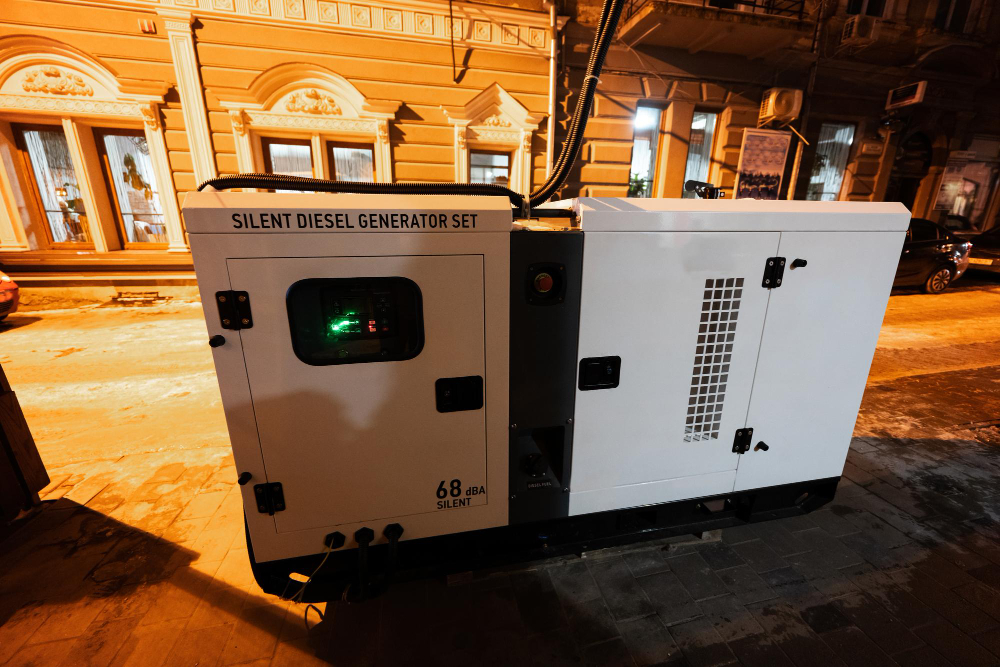
If you are weighing a whole-home backup generator, cost in Ontario is probably the first question on your mind, and it is a fair one. Prices for a fully installed system vary more than most homeowners expect, and the number you see in an online ad rarely matches what actually lands on your invoice.
The honest answer is that there is no single price, because a whole-home generator is really three purchases bundled together: the generator itself, the electrical work that connects it to your house, and the ongoing cost of keeping it fuelled and maintained.
Demand for backup power has climbed across Peterborough, Lakefield, Clarington, and the Kawartha region as winters bring more freezing rain and longer outages. Environment and Climate Change Canada has found that roughly 93 percent of the extreme precipitation events it studied nationally, 39 of 42 analyzed since mid-2025, were made more likely by human-caused climate change, and freezing rain is one of the clearest local versions of that trend.
A properly quoted whole-home generator installation covers the generator, the electrical work, and the fuel supply, not just a single sticker price. The sections below walk through what drives that cost, typical ranges for Ontario homes, and the line items homeowners most often forget to budget for.
In this article, you will learn about:
- What goes into the cost of a whole-home generator
- Typical cost ranges for Ontario homeowners
- Costs beyond the generator itself
- Getting the most value for your investment
Keep reading to see exactly where your money goes in a whole-home generator project, and how to avoid paying for more, or less, than your home actually needs.
What goes into the cost of a whole-home generator
A whole-home generator’s price tag is really the sum of several separate decisions, each of which moves the final number up or down independently.
Understanding these factors before you request quotes makes it much easier to compare them apples to apples, rather than being swayed by whichever number looks lowest on paper.
Generator size and output (kW)
Generators are priced by kilowatt output, and output is the single biggest driver of cost. A unit sized to cover a few essential circuits costs meaningfully less than one sized to run an entire house, central air conditioning included.
Bigger is not automatically better here. An oversized unit costs more upfront, uses more fuel at partial load, and does not actually protect anything a correctly sized unit would not already cover.
Typical circuit tiers homeowners choose between include:
- Essential-only: furnace, well pump, sump pump, refrigerator, and a few lights
- Partial-home: essentials plus key outlets, a secondary fridge or freezer, and a home office
- Whole-home: everything above plus central air conditioning, electric heat, and the full panel
This is where a proper load calculation earns its cost. A whole-home generator sized against your home’s actual circuits, rather than a rule of thumb, is the difference between paying for capacity you use and capacity you never touch.
Choosing a tier is really about deciding what normal needs to look like during a multi-day outage, not just what survives a short one.
Fuel type: natural gas versus propane
Most whole-home standby units run on natural gas or propane. If your home already has a natural gas line, that connection usually keeps installation costs lower, since you are tapping into existing infrastructure rather than adding a propane tank.
Rural properties without a gas line, common across the Kawarthas and Northumberland County, typically need a propane tank added to the project, which raises the upfront cost but does not meaningfully change the generator’s ongoing running cost.
The practical trade-offs between the two fuel types come down to a few points:
- Natural gas: lower installation cost where a line already exists, unlimited run time, no tank to refill
- Propane: works anywhere, including properties without gas service, and stores well through long idle periods
- Diesel: less common for residential use in Ontario, but occasionally chosen for very large installations
Propane also tends to store indefinitely, which matters for a generator that may sit unused for months between outages.
Neither fuel type meaningfully changes maintenance requirements, so the choice mostly comes down to what is actually available at your property.
Installation complexity and site conditions
Where the generator sits, how far it has to run gas or propane lines, and how close it is to your electrical panel all affect labour cost. A unit placed close to the panel with a short, straightforward gas run costs less to install than one that needs a long trench or a tricky site layout.
Older homes often add a layer of complexity here. A panel upgrade is sometimes required before a transfer switch can even be added, and that work is a separate cost from the generator itself.
Clearance requirements for exhaust, distance from windows and doors, and local permitting rules can also shift where a unit is allowed to sit, which occasionally changes the installation cost more than the generator’s size does.
Older Northumberland County and Kawartha Lakes homes often benefit from a broader electrical safety review alongside a generator quote, since outdated wiring can add cost that has nothing to do with the generator itself.
Typical cost ranges for Ontario homeowners
With the main cost drivers in mind, here is what Ontario homeowners typically pay once everything, generator, installation, and electrical work, is added together. These are general ranges, not quotes, and your actual number depends on the factors above.
Treat these as a starting point for a conversation with an electrician, not a final price.
Smaller homes and modest circuit coverage
A smaller system covering essential circuits only, a furnace, a well pump, a sump pump, a fridge, and a handful of lights, typically runs in the range of 8,000 to 12,000 dollars fully installed in Ontario, depending on fuel source and site conditions.
This tier suits homeowners who mainly want to protect against the systems that cause real damage when they fail, water, heat, and food safety, without paying for coverage of circuits that can simply wait out a short outage.
Mid-size homes with full or near-full coverage
Covering most or all of a typical home, including central air conditioning and a larger panel, usually lands in the 12,000 to 18,000 dollar range once installation is complete.
This is the most common tier for Peterborough area homes that want the house to function close to normally during an extended outage, rather than just protecting the essentials.
Larger homes, acreages, and properties with wells
Larger rural properties, particularly those with a private well, often need a bigger unit to comfortably handle a well pump’s startup surge alongside everything else, which can push installed costs toward 18,000 to 25,000 dollars or more.
A well pump draws significantly more power at startup than while running, and undersizing a generator around that surge is one of the most common and most expensive mistakes on acreage properties.
Properties with a well repair history of pressure issues or an aging pump are also worth having assessed before finalizing generator sizing, since a struggling pump changes the load calculation.
An aging pressure tank that has lost its air charge puts extra demand on the pump, which can push the required generator capacity higher than a simple circuit list would suggest.
Rural properties with a septic system that relies on an effluent pump should include that pump in the sizing conversation too, since it is easy to overlook next to the well and the furnace.
Costs beyond the generator itself
The unit itself is often the smallest surprise in a generator project. The costs homeowners forget to budget for tend to show up in the electrical work and the years of ownership that follow.
Three categories account for most of the difference between an online price estimate and a real invoice.
Electrical panel upgrades and transfer switches
A transfer switch, automatic or manual, is a required part of any standby installation, and its cost scales with how many circuits it needs to manage.
Homes with an older or already-full electrical panel frequently need an upgrade before a transfer switch can be added safely, and that upgrade is priced separately from the generator package.
Homeowners who have noticed circuit breakers tripping under normal loads should expect this conversation to come up during a generator quote, since it is often the same underlying capacity issue.
A broader home electrical repair visit before the installation also catches loose connections or outdated fixtures that an electrician would otherwise find mid-project, adding cost and delay partway through.
Permits, inspections, and gas or propane line work
Ontario municipalities require an electrical permit for a standby generator installation, along with a gas or propane line permit where applicable. Permit and inspection fees are a modest but real line item, usually a few hundred dollars.
Running a new gas or propane line adds cost based on distance and whether the run is straightforward or requires trenching through landscaping, a driveway, or hard ground.
A complete generator quote should itemize each of the following separately, not bundle them into one number:
- The generator unit itself, by size and brand
- The transfer switch and any panel work it requires
- Gas or propane line installation, including any tank
- Permits, inspection fees, and the final commissioning visit
A quote that lumps all of this into a single bottom-line number is harder to compare against a competitor’s itemized estimate, and it makes it harder to spot where the real cost differences actually sit.
Asking for an itemized breakdown costs nothing and makes the eventual comparison between contractors far more useful.
Ongoing maintenance and fuel costs
A generator is not a one-time purchase. Generator maintenance typically runs once or twice a year and covers an oil change, a filter check, a battery test, and a load test, usually a few hundred dollars annually depending on the unit.
Fuel costs depend entirely on how often the generator actually runs. A unit that starts briefly for a weekly self-test uses very little fuel over a year compared to one that runs continuously through a multi-day winter outage.
Skipping maintenance to save that annual cost is a false economy. A unit that fails to start during the one outage it exists for has effectively cost its full purchase price for nothing.
A pre-season generator check before the first storm of the year, covering fuel, battery charge, and a quick test run, protects the full value of the investment at a fraction of the installation cost.
Getting the most value for your investment
Cost comparisons between contractors can be misleading if you are not comparing the same thing. The cheapest quote on paper is not always the best value once the details are accounted for.
A few practical habits protect you from the most common ways a generator project ends up costing more than it should.
Why the cheapest quote isn’t always the best one
A noticeably low quote often means a smaller generator than you actually need, a cheaper transfer switch, or work that skips a panel upgrade your home genuinely requires.
The cheapest number today can become the most expensive one later, once an undersized system fails under real load or a skipped upgrade causes a problem down the line.
Sizing correctly the first time to avoid costly redos
Upsizing a generator after installation is far more expensive than sizing it correctly from the start, since it usually means a new unit, new wiring, and sometimes a new pad, rather than a simple adjustment.
A proper load calculation before you buy, accounting for every circuit you actually want covered, including a well pump’s startup surge, is the cheapest insurance in the entire project.
A proper load calculation typically works through a short sequence:
- List every circuit you want covered, from the furnace to the well pump to specific outlets
- Identify starting, or surge, wattage for motors like well pumps and furnace blowers
- Add running wattage for everything you want powered continuously
- Build in a reasonable buffer for future additions like a heat pump or an EV charger
Homeowners with well system maintenance or a pressure tank replacement on the horizon should factor that equipment into sizing now rather than discovering the gap after the generator is already installed.
Skipping this step to save an afternoon of planning is the single most common reason homeowners end up revisiting their generator size within the first few years.
When a portable generator makes more financial sense
A whole-home standby system is not always the right financial call. A homeowner who loses power rarely, and briefly, may get better value from a portable unit paired with electrical service to confirm the home’s wiring can safely handle one.
A portable generator costs a fraction of a standby system, though it requires manual setup every time and typically cannot cover a full house.
A portable unit tends to make the most financial sense when:
- Outages in your area are genuinely rare and short
- Your home does not rely on a well or a finished, vulnerable basement
- You are comfortable with manual setup every time the power goes out
- Budget constraints make a full standby installation unrealistic this year
For a property with a well, a finished basement, or anyone with a real need for uninterrupted power, the math usually tips back toward a standby system despite the higher upfront cost, simply because the cost of a single bad outage, a flooded basement, frozen pipes, or a failed well, often exceeds the price difference.
Recognizing these emergency warning signs in advance is part of that calculation too, since a household that already knows its weak points can size a system around them rather than guessing.
Outside of those conditions, the standby system tends to pay for itself the first time it prevents a genuinely expensive failure.
Conclusion
A whole-home backup generator in Ontario typically lands somewhere between 8,000 and 25,000 dollars installed, depending on size, fuel type, site conditions, and how much of your home you want covered. The generator itself is only one piece of that number, the electrical work, permits, and ongoing maintenance all factor in too.
The real value of a correct quote is not the lowest number, it is a number that actually reflects what your home needs, sized once and done right rather than revisited after an undersized system fails during the storm it was supposed to get you through.
If you want a clear, itemized quote based on your actual home and circuits, rather than a generic estimate, Cardinal Home can walk you through sizing, fuel options, and installation before you commit to a number. Contact Cardinal Home to get a real quote for your property.