


Every fall, Peterborough homeowners ask the same question: what is this winter actually going to look like? This year, the honest answer from meteorologists points toward more freezing rain and power outages, and the forecast behind that prediction is worth understanding before the first ice storm hits, not after.
Environment and Climate Change Canada’s seasonal outlook points to a weak La Nina pattern this year, the kind that tends to send storm tracks sliding through the Great Lakes region rather than staying to the north. For Peterborough, Lakefield, and the wider Kawartha area, that typically means more days hovering near the freezing mark, exactly the conditions that turn ordinary rain into a sheet of ice on roads, trees, and power lines.
None of this is guesswork dressed up as forecasting. Federal scientists can now show, event by event, how a warming climate is loading the dice toward more extreme precipitation, and freezing rain is one of the clearest local consequences for a region like ours.
This article breaks down what the forecast means in plain language, what freezing rain actually does to the power grid, and the specific steps worth taking around your home before the season’s first serious ice event. If a generator is part of your plan, a pre-season generator check belongs near the top of that list.
In this article, you will learn about:
- What this winter’s forecast actually says about freezing rain
- How freezing rain turns into a power outage
- Getting your home ready before the first freezing rain event
- Backup power options for this winter specifically
Keep reading to find out exactly where this winter’s forecast puts your home at risk, and what you can still do about it before the first storm rolls in.
What this winter’s forecast actually says about freezing rain
Winter forecasts get dismissed too easily as guesswork, but seasonal outlooks from federal meteorologists are built from real ocean and atmospheric data, not a feeling about how cold last December was.
Understanding the forecast in plain terms helps explain why freezing rain, specifically, is the detail worth paying attention to this year.
A weak La Nina winter, explained simply
La Nina describes a pattern of cooler than usual water in the central Pacific Ocean, and it shows up in Canada’s winter weather almost every few years. This winter is shaping up to be a weak La Nina, Canada’s fifth in six years.
A weak La Nina tends to push storm systems onto a track that slides through the western Great Lakes before swinging east, which is almost a direct route toward south-central Ontario. It does not guarantee a harsh winter, but it does raise the odds of an active storm track through this specific region.
For a homeowner, the practical takeaway is simple. A weak La Nina does not promise constant cold, it promises a more dynamic season with real swings between mild and frozen, which is exactly the recipe for freezing rain.
Why forecasters are watching freezing rain specifically this year
Freezing rain forms when snow melts into rain while falling through a warm layer of air, then refreezes the instant it touches a cold surface near the ground. That narrow band of near-freezing temperatures is becoming more common across southern Ontario as winters trend milder overall.
This year’s outlook calls for more precipitation and a more active storm track through the east, with good odds of the kind of temperature swings that produce freezing rain rather than a clean snowfall.
A few signs point toward a freezing rain-heavy winter rather than a snow-heavy one:
- Storm systems tracking through the Great Lakes instead of staying to the north
- More days where the overnight low sits right around the freezing mark
- Warmer air aloft meeting a shallow cold layer at ground level
- A pattern of mild stretches interrupted by sharp Arctic outbreaks
Each of these conditions on its own is unremarkable. Together, over a full winter, they add up to more freezing rain events than a straightforward cold season would produce.
That is the pattern Peterborough homeowners should actually plan around this year, not just the headline temperature.
The link between climate change and more extreme winter precipitation
Seasonal forecasts used to stop at temperature and precipitation outlooks. Federal scientists have now built tools that can show, after the fact, how much more likely a specific extreme weather event was made by a warming climate.
Environment and Climate Change Canada analyzed 42 of the most extreme precipitation events across the country since mid-2025 and found that roughly 93 percent of them, 39 out of 42, were made more likely by human-caused climate change.
That is not a distant statistic. It means the kind of intense rain and freezing rain events hitting the Kawarthas are measurably more likely now than they would have been a generation ago, and the trend only points in one direction.
How freezing rain turns into a power outage
Freezing rain does not just make driveways slippery. It is one of the weather events most likely to take down the specific infrastructure that keeps your home’s power running.
Understanding why helps explain both how long outages tend to last and why some parts of the grid fail before others.
Why ice does more damage than snow
Snow is light and tends to fall off branches and wires fairly easily. Ice does not. A branch coated in even a thin glaze of ice can weigh several times more than it does bare, and that weight does not shake loose, it has to break off or bring down whatever it is resting on.
That is why a modest freezing rain event can knock out more power than a much larger snowfall. The weight sits and accumulates for as long as the precipitation continues, rather than sliding off as it falls.
The trees and lines most likely to come down first
Older, taller trees close to overhead lines are usually the first casualties. Peterborough’s many mature, treed properties are a genuine asset most of the year and a genuine liability during an ice event.
Utilities typically see failures cluster in the same kinds of spots repeatedly: long rural spans with tree cover close to the line, older or undersized conductors, and intersections where multiple lines cross near heavy branches.
When a serious freezing rain event hits, the damage tends to progress in a fairly predictable order:
- Ice accumulates steadily on exposed branches and wires through the event
- The heaviest, most exposed limbs break first, often within the first few hours
- Breaks concentrate near rural, treed stretches rather than open areas
- Crews triage the worst blockages first, which can leave some properties waiting days
That order matters for planning purposes. A rural property on a treed, lower-priority line should expect to wait longer than a property on a well-cleared urban circuit, regardless of how the storm itself felt.
Knowing where your home sits in that order is part of deciding how much backup power actually makes sense for your situation.
What a multi-day outage actually looks like
A multi-day outage is not simply a longer version of a two-hour outage. The practical failures compound. Food spoils, a well runs dry without pump pressure, a sump pump sits idle during the exact weather that is overwhelming it, and a cold house starts flirting with frozen pipes.
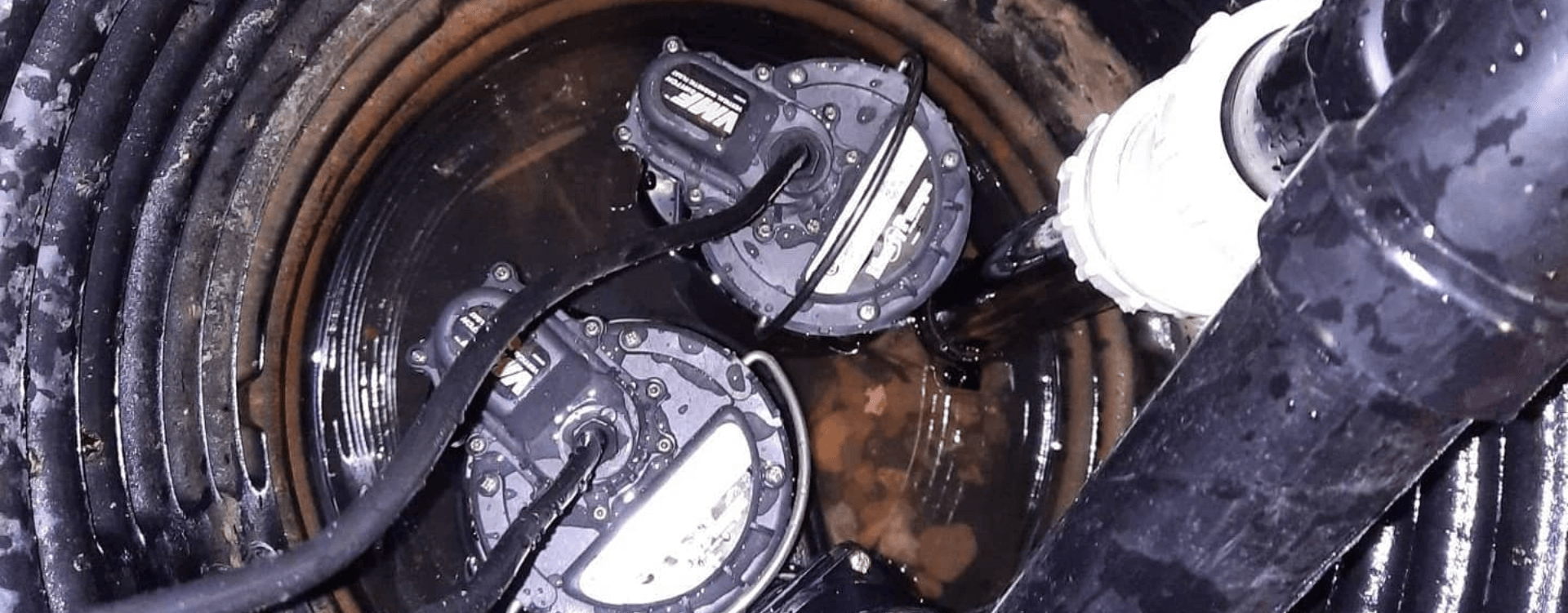
An idle sump pump during a prolonged outage can also contribute to sewer backup, since ejector and effluent pumps draw on the same electrical supply as a standard sump pump.
A furnace that goes cold for more than a day or two raises the odds of frozen pipes along exterior walls and in uninsulated basements, and a burst pipe during an outage is a far more expensive problem than the outage itself.
Recognizing these emergency warning signs early, rather than after a pipe has already failed, is what keeps a multi-day outage from turning into a multi-day repair project too.
For most Peterborough area homes, the gap between a short outage and a multi-day one is the gap between mild inconvenience and a genuine repair bill.
Getting your home ready before the first freezing rain event
Forecasts are useful precisely because they give you lead time. The work that actually protects your home has to happen before the ice arrives, not during it.
Three areas deserve attention heading into a winter that is shaping up to bring more freezing rain than usual.
A pre-winter electrical check
An electrical system that is already showing small problems, a breaker that trips occasionally, an outlet that feels warm, a light that flickers under load, is far more likely to fail outright once a storm adds a surge or a voltage dip on top of it.
A professional look at your panel and wiring before the season starts catches the kind of small issue that turns into a no-power situation during the worst possible week to deal with it.
A few warning signs suggest your panel or wiring needs a look before winter arrives:
- Breakers that trip repeatedly without an obvious cause
- Outlets or switch plates that feel warm to the touch
- Lights that flicker or dim when larger appliances start up
- A panel that still uses fuses or dates back several decades
Homeowners noticing recurring issues with circuit breakers that trip for no clear reason should treat that as a pre-winter priority rather than something to monitor through the season.
The same goes for a panel that is already at capacity or original to an older home, since an overloaded panel is more likely to fail under storm-related strain.
Older Kawartha Lakes properties in particular benefit from a proper electrical inspection before winter, since decades-old wiring rarely announces a problem clearly until it fails completely.
The same logic applies to electrical safety reviews in older Northumberland County homes, where outdated wiring and a modern electrical load are not always a comfortable match.
Anyone noticing warm outlets, buzzing switches, or an unexplained burning smell should book electrical service right away rather than waiting for the symptom to repeat during a storm.
A broader home electrical repair visit before winter also catches loose connections and outdated fixtures that a quick breaker check alone would miss.
Protecting your well, sump pump, and septic system
These three systems share one thing in common: they all depend on electricity, and all three fail the moment the power does, regardless of how well built they are otherwise.
A well repair assessment before winter catches a pump or pressure switch that is already struggling, since a marginal pump is far more likely to fail outright during the stress of a power interruption and restoration cycle.
Well system maintenance done now, rather than after the first outage, is the cheaper and less disruptive option by a wide margin.
A well pump that has been cycling more than usual or losing pressure gradually is already under strain, and a power interruption is often what pushes it the rest of the way to failure.
An aging pressure tank that has lost its air charge drains its reserve even faster once the pump stops, leaving a household with almost no water the moment the power goes out.
Sump pumps deserve the same attention, particularly in basements that have flooded before. A pump that has not been tested recently may not restart cleanly after a power interruption, right when meltwater or rain is pushing hardest against your foundation.
Septic systems with a pump are often overlooked in this conversation. A septic system that relies on an effluent pump stops moving wastewater the moment the power cuts out, and a multi-day outage can mean a multi-day backup risk for anyone on that kind of system.
Stocking up: what actually matters beyond flashlights
Flashlights and candles get all the attention, but they are not what actually gets a Peterborough household through a multi-day winter outage. Heat, water, and a way to keep perishable food cold matter far more.
A practical cold-weather outage kit looks different from a summer one, and it is worth building before the season starts rather than during the first storm warning.
A realistic winter outage kit should include:
- A battery or hand-crank radio for weather updates when cell service is unreliable
- Enough bottled water for several days, since a well-dependent home loses running water immediately
- Warm bedding and layers for every member of the household, including pets
- A plan for checking or replacing a carbon monoxide detector if you run any fuel-burning equipment indoors during the outage
That last point matters more than people expect. Portable generators and alternative heat sources are responsible for a disproportionate share of winter carbon monoxide incidents, almost always because they were run too close to the house or indoors.
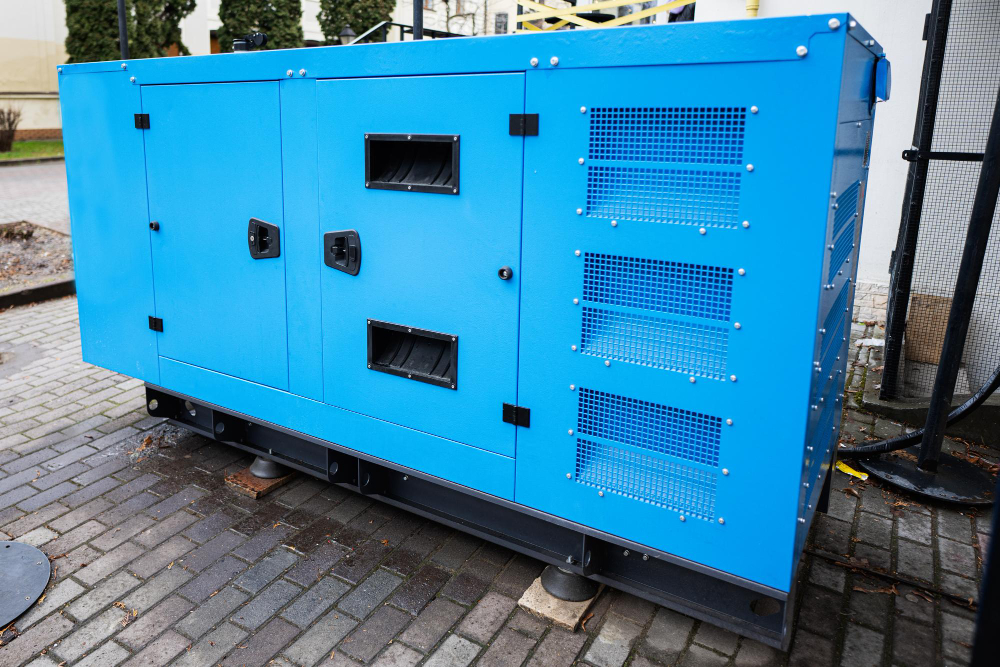
A properly installed standby generator largely removes that risk, since it runs outside at a safe distance by design, which is one more point in its favour over a portable unit run through a cracked window.
Backup power options for this winter specifically
Everything above points toward the same conclusion: this winter’s forecast makes backup power a more pressing decision than usual, not a someday project.
The right next step depends on how much time is actually left before the season’s first serious storm.
Why “get a generator eventually” isn’t a plan for this forecast
A standby generator installation takes real lead time, a site assessment, permits, a gas or propane line, and a licensed electrician to tie in the transfer switch. Starting that process after the first ice storm of the season means missing the protection for the event that prompted the decision in the first place.
Homeowners who have been considering a whole-home generator for a while now have a concrete reason to move from considering to scheduling, given what this winter’s forecast is pointing toward.
Quick wins if you can’t install a standby system before winter
If a full standby installation will not happen before the first storm, a few smaller steps still meaningfully reduce your risk this season.
A portable generator, used correctly and always outdoors, can keep a furnace, a well pump, and a fridge running through a shorter outage, even if it cannot cover the whole house.
A reasonable short-term plan covers a few essentials in order of priority:
- Confirm which circuits matter most: furnace, well pump, sump pump, fridge
- Have a transfer plan ready, either a manual transfer switch or clearly labelled extension cord routes
- Store enough fuel safely to run a portable unit for at least a day or two
- Schedule the standby system conversation for as soon as the weather allows, rather than waiting until next fall
None of this replaces a proper installation, but it closes the gap for this specific season while a more permanent solution gets scheduled.
It also gives you real information, exactly how much load a portable unit covers comfortably, that makes sizing a future standby system more accurate.
Making sure an existing generator will actually start when you need it
A generator that has not run since last spring is a question mark, not a safety net. Fuel degrades, batteries lose charge, and small mechanical issues do not announce themselves until the one night you actually need the unit to start.
Generator maintenance before the season begins, fresh fuel, a charged battery, and a short test run under load, is the difference between a generator that works and one that becomes a second problem during the storm.
For anyone who has not had their unit serviced since it was installed, a seasonal check is worth scheduling now, well ahead of the first real test of the winter.
Conclusion
This winter’s forecast points toward more freezing rain for Peterborough, Lakefield, Clarington, and the surrounding Kawartha area, and the reasons behind that forecast are grounded in real data, not guesswork. A weak La Nina pattern, a more active storm track through the Great Lakes, and a measurably warming climate all point in the same direction.
None of that has to mean a stressful winter. A pre-season electrical check, a look at your well and sump pump, a realistic outage kit, and a generator plan that actually matches this year’s forecast turn a concerning headline into a manageable checklist.
If you want a professional set of eyes on your panel, your well, or your generator before the first serious storm hits, Cardinal Home can help you get ahead of it rather than reacting to it. Contact Cardinal Home to schedule a pre-winter check for your home.