



Ontario’s drought and wildfire risk has stopped being a once-in-a-decade story and started looking like a pattern, and that pattern changes what “being prepared” actually means for a home that depends on a private well, a septic system, or both.
Two of the most severe wildfire seasons in Canadian history have landed back to back, and the dry conditions behind them do not stop at the edge of the forest. The same lack of rain that dries out the bush also lowers the water table feeding rural wells and stresses septic systems built to handle normal seasonal moisture, not extended dry stretches.
None of this means a specific disaster is guaranteed next year. It means the systems that keep water running and power on during a bad stretch are worth a real look before the next one arrives, not after.
This guide walks through what drought and wildfire conditions actually do to a private water system, and why backup power keeps coming up in the same conversation. A property already overdue for well system maintenance is a reasonable place to start.
In this article, you will learn about:
- Why this isn’t just a bad summer problem anymore
- What a drought year actually does to a private water system
- Why backup power becomes a bigger deal in wildfire-prone years
- Getting ahead of it before next season
Keep reading to see exactly where drought, wildfire risk, and your home’s water and power systems actually connect.
Why this isn’t just a bad summer problem anymore
A single dry summer is normal. Two severe wildfire seasons in a row, paired with persistent regional drought, is the kind of pattern that is worth paying attention to rather than writing off as bad luck.
Understanding why these conditions keep recurring helps explain why water and power resilience is now a more practical conversation than it used to be.
Two of the worst wildfire seasons on record, back to back
Canada’s 2023 and 2025 wildfire seasons both rank among the most severe on record, and 2026 followed with widespread, sustained fire activity across multiple provinces, including a particularly intense season in parts of Ontario. The Government of Canada reported more than 1.4 million hectares burned nationwide by July 2026 alone, with officials noting that wildfire seasons are trending longer and more complex as conditions shift year to year.
That trend is not an isolated statistic. It reflects the same warm, dry stretches that show up on a smaller scale as a slow-draining well or a septic field that smells different than it used to in July.
Back-to-back severe seasons also strain the resources that respond to them, which means a region affected by smoke, evacuation, or power disruption cannot always count on the fastest possible outside help arriving.
Drought and wildfire are connected, not separate problems
Wildfire risk and drought are driven by the same underlying conditions: low precipitation, above-normal temperatures, and dry ground vegetation that both fuels fires and signals a falling water table underneath. Treating them as two unrelated headlines misses how directly they feed each other.
A dry spring followed by a dry summer does more than raise fire danger. It reduces the groundwater recharge a private well depends on, and it means less moisture in the ground around buried utility lines, septic beds, and foundation drainage.
Extended dry stretches followed by sudden heavy rain are becoming a familiar pattern too, and that swing between extremes is often harder on infrastructure than steady weather in either direction. Preventing summer plumbing problems increasingly means planning for both ends of that swing, not just the dry part.
What this means for a Peterborough-area property specifically
Peterborough and the surrounding townships sit in a region where private wells, septic systems, and older rural electrical infrastructure are the norm rather than the exception, which means drought and grid-reliability issues reach homes here more directly than in a fully serviced city.
Dry ground shifts more than people expect. Extended dry spells can cause soil to pull away from buried pipe, and that movement sometimes turns a routine repair into something that needs real excavation work to fix properly.
Outdoor water use does not stop just because conditions are dry, and in a lot of cases it increases as lawns and gardens struggle. Outdoor taps and irrigation lines draw from the same well supply as the house, so outdoor plumbing service calls often rise right alongside drought conditions rather than falling off.
What a drought year actually does to a private water system
A municipal water customer barely notices a dry summer beyond a lawn-watering restriction. A private well or septic system responds very differently, and usually with less warning.
Knowing what to watch for turns a slow-moving problem into something you catch early rather than during an emergency call.
Wells draw from a water table that drought lowers
A drilled well draws water from an aquifer that gets recharged by rain and snowmelt soaking into the ground. A sustained dry stretch reduces that recharge, and a well that performed fine for years can start showing a noticeably lower yield during an extended drought.
Signs of a struggling well often show up gradually rather than all at once.
- The pump runs longer to deliver the same amount of water it always has.
- Air sputters through the tap on a steady basis, not just occasionally.
- The well briefly runs dry during periods of heavier household use.
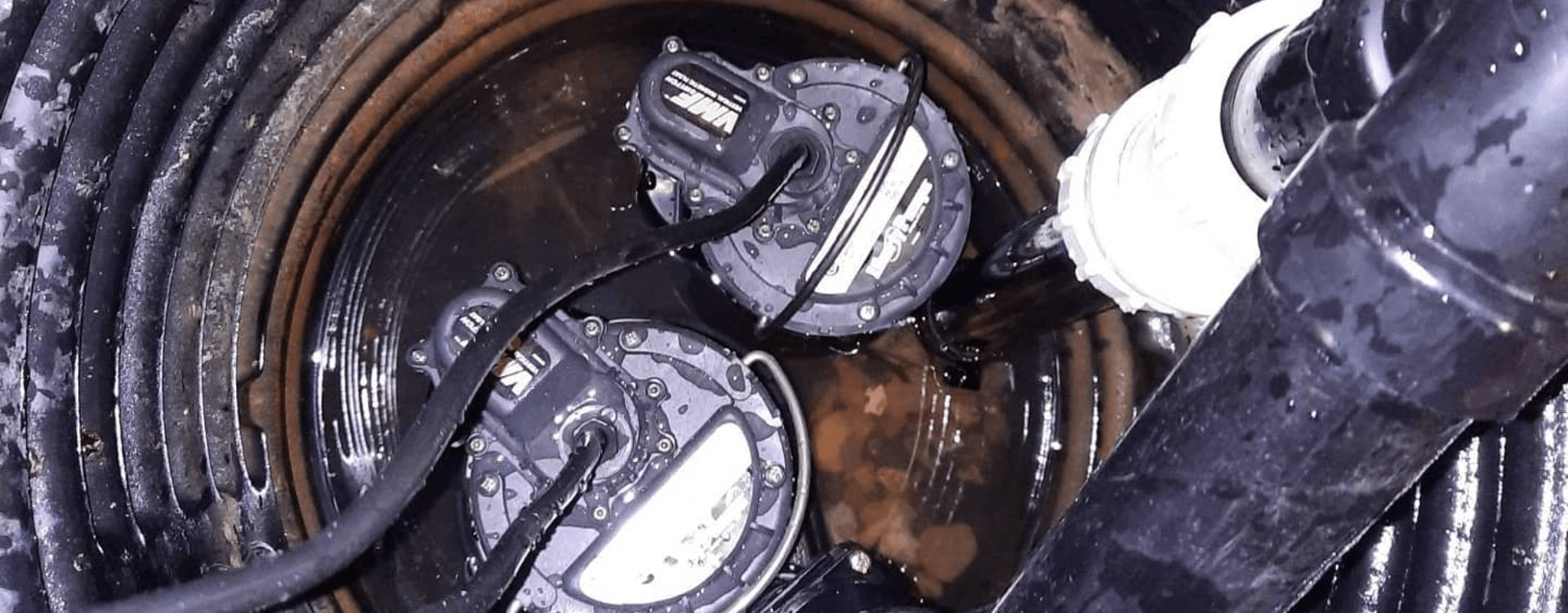
A well pump repair call during a drought year is sometimes less about a failed pump and more about a pump working harder against a falling water level.
Baseline information matters more during a drought than any other time. Well water testing before conditions get difficult gives you a real comparison point if water quality or flow starts to change later in the season.
Septic systems feel it too, just differently
A septic system depends on soil in the drain field to absorb and treat wastewater properly, and that process assumes a certain amount of ground moisture to work as designed. Extremely dry soil behaves differently than the conditions the system was originally built around.
A few conditions are worth watching for specifically during a dry stretch:
- Cracked or visibly shrunken soil over the drain field.
- Unusual odours that weren’t present in previous summers.
- Slower-than-normal drainage inside the house despite no recent heavy use.
Heat and dryness affect a septic system in ways that are easy to miss until something goes wrong. Summer heat affects septic systems by changing how quickly effluent breaks down and how the surrounding soil handles absorption, which shifts the system’s normal rhythm without any obvious warning sign at first.
Cracked, dry ground around a septic tank or line is also worth a second look, since shifting soil during a drought is one of several septic tank repair warning signs that get easy to dismiss as normal yard conditions rather than an actual system issue.
Low water pressure is often the first symptom, not the last
Low water pressure is usually the first thing a homeowner actually notices, long before anyone connects it back to drought conditions underground. By the time pressure drops noticeably at the tap, the well has often already been working harder than usual for weeks.
Low water pressure has several possible causes, but a falling water table is one worth ruling in or out early during a dry season rather than assuming it is only a fixture or plumbing issue.
Pressure tanks also work harder when a well is struggling to keep up with demand, and that added strain shortens their working life. A well pressure tank under constant stress during a dry summer is one more reason pressure problems deserve an actual inspection rather than a guess.
Why backup power becomes a bigger deal in wildfire-prone years
Water problems and power problems rarely show up as two separate conversations during a bad wildfire season. A well that is already struggling with low water levels becomes a much bigger problem the moment the power goes out too.
That overlap is exactly why backup power keeps coming up alongside drought and wildfire preparedness rather than as its own unrelated topic.
Grid reliability drops exactly when you need it most
Wildfire activity puts real strain on the electrical grid in more than one way at once.
- Active fire damage to transmission or distribution infrastructure in or near affected regions.
- Preventive shutoffs utilities use in high-risk areas during extreme fire danger.
- A sheer demand spike from hotter, drier summers running air conditioning harder for longer.
Rural and semi-rural properties, including much of the Peterborough area, often sit further down the repair priority list during widespread outages simply because of how utility crews triage restoration across a wide service territory. An aging or undersized electric service entrance only makes that wait more disruptive once power does need to be restored safely.
None of this requires a wildfire to reach your property directly. Grid strain from fire activity, heat demand, or storm damage somewhere else in the system can still mean hours or days without power at home.
A well pump without power is a dry house, drought or not
A well pump needs electricity to run, full stop. A perfectly healthy well with plenty of water underground is still useless to a household the moment the power goes out, which means a power outage during a drought compounds two problems into one at exactly the worst time.
This is where a home generator stops being a comfort item and starts being a water-access item. For a property already managing a stressed well, keeping the pump running through an outage is not optional in the way it might be for a municipal-water household.
The same logic applies to a septic system with a pump component, since an effluent pump that cannot run means wastewater has nowhere to go until power returns.
Standby power protects water access, not just lights
A portable generator can keep a well pump running for a while, but only if someone is home, available, and willing to manage fuel and setup for as long as the outage lasts, which can stretch well past a single evening during a widespread grid event.
A whole home generator removes that dependency entirely, starting automatically and keeping the well pump, septic pump if applicable, and the rest of the house running without anyone needing to do anything once the power drops.
For a property where water access depends entirely on an electric pump, that automatic response is the difference between a minor inconvenience and a genuine household emergency during exactly the kind of extended outage a bad wildfire or storm season tends to produce.
Getting ahead of it before next season
None of this calls for panic, and it does not require predicting exactly how severe next year’s conditions will be. It calls for treating water and power resilience as connected systems worth checking together, on a reasonable schedule, rather than reacting to each one separately after something fails.
A few practical steps make that approach manageable rather than overwhelming.
What a resilience-focused assessment actually checks
A proper assessment looks at water and power together rather than treating a well inspection and an electrical check as unrelated appointments scheduled months apart.
- Well yield and pump performance, especially compared against baseline testing from a normal year.
- Septic system condition, including the drain field’s response to recent dry and wet extremes.
- Electrical panel capacity and condition, since this determines what backup power options are realistically available.
- Existing or planned generator setup, and whether it covers the circuits that actually matter during an outage.
An electrical panel that was adequate for a smaller household years ago does not always have the room for a generator connection added later, which is exactly the kind of gap an assessment catches before it becomes a delay during an actual emergency.
A quick check on the septic side matters just as much. Local septic service visits are a reasonable place to flag drought-related wear while a technician is already looking at the system for routine reasons.
Sequencing the upgrades that matter most
Not every property needs every upgrade at once, and sequencing matters more than trying to fix everything in a single season.
- Address any confirmed well or septic issue first, since backup power cannot fix a system that is already failing on its own.
- Handle electrical panel limitations next, since this determines what generator option is even possible.
- Add or upsize backup power last, once the systems it needs to protect are confirmed to be in good working order.
Homes with older wiring sometimes need an extra step before any of this moves forward. Electrical safety issues in an older panel are common enough in this region that they surface during almost every generator-planning visit.
An electrical panel upgrade ends up being a prerequisite rather than an optional add-on for a fair number of these properties.
Why “next spring” is really “right now”
Generator installers, well technicians, and septic services all tend to get busiest right as the next dry season or storm pattern starts, which is exactly when availability gets tightest and lead times stretch out the longest.
Scheduling work in the quieter months ahead of that rush means an actual installation date rather than a waiting list once conditions turn. Generator maintenance on an existing unit is a reasonable first call for anyone who already owns a generator but has not confirmed it will actually start when needed.
For anyone without a generator yet, the planning conversation itself does not need to wait for a confirmed forecast. Preparing your generator setup, sizing, and installation ahead of the season it is actually needed is simply easier to do calmly in advance than urgently in the middle of an outage.
Cardinal Home’s crews handle this kind of cross-system work across Peterborough and the surrounding counties as a matter of course. General electrical home repair often comes up in the same visit as a well or generator conversation, simply because the systems are more connected than they first appear.
Conclusion
Ontario’s recent run of severe wildfire seasons and the dry conditions behind them are not a reason to panic about any single property, but they are a reasonable prompt to look at water and power resilience as connected rather than separate concerns.
A well that is quietly losing yield, a septic system under more stress than usual, and a generator setup that has never actually been tested together tell a more complete story than any one of those issues on its own. Catching that pattern early, in a quiet season, is a far better position than discovering it during an actual emergency.
If it has been a while since your well, septic system, and backup power setup were looked at together, now is a reasonable time to change that. Reach out to Cardinal Home to book an assessment before the next dry season or storm pattern puts it to the test.